Cases
Loading cases…
Loading cases…
20 cases
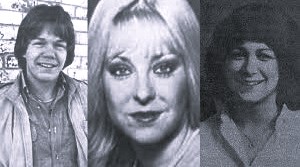
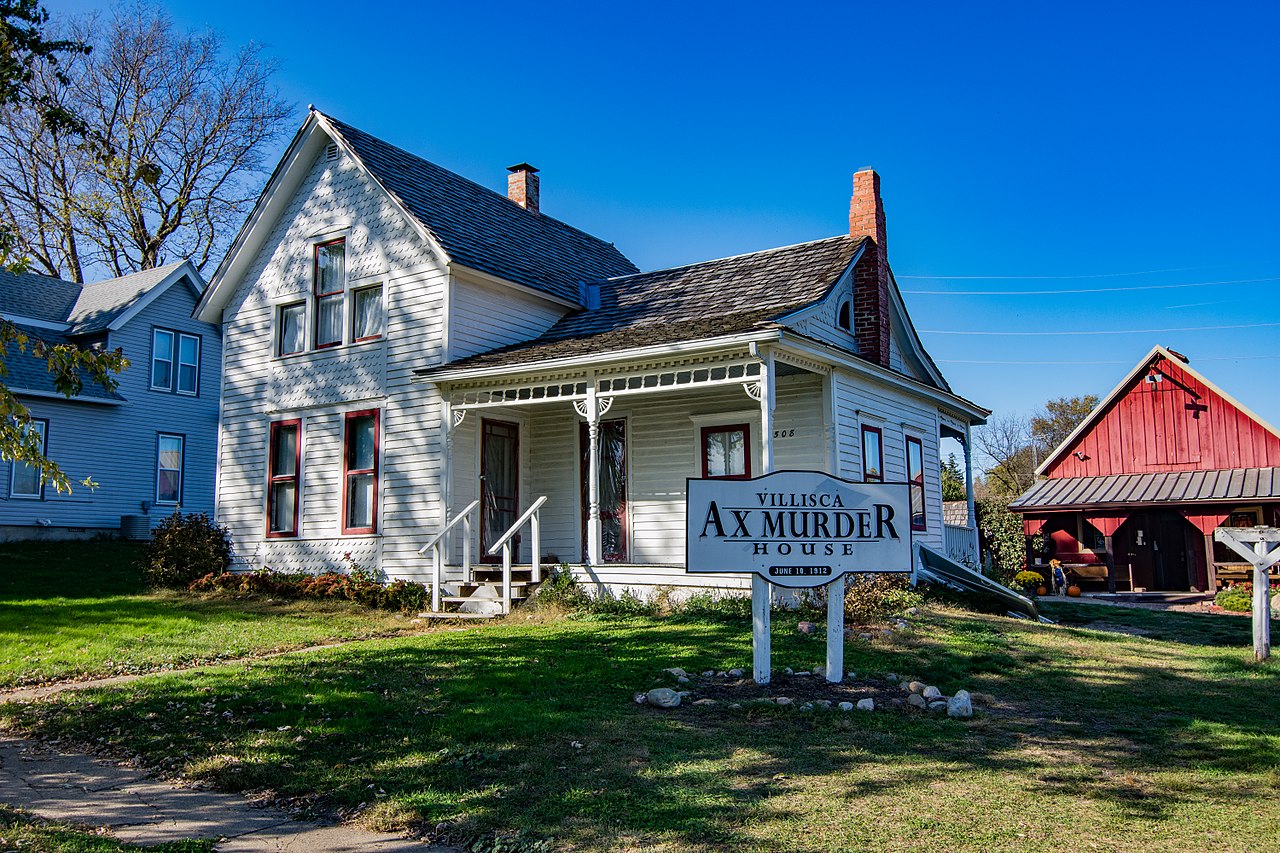
The Colorado Springs spree killing of May 17, 1986, stands as one of Colorado's deadliest mass shootings and a case that would foreshadow the wave of mass-casualty violence to come. Gilbert Eugenio Archibeque, a 29-year-old plumber, carried out a calculated double robbery that left five people dead and one survivor across two adjacent businesses—the Grand View Lounge bar and the Kwik-Way convenience store—before setting the bar ablaze in an attempt to cover his tracks. He was found dead the following day, having taken his own life as police closed in, leaving no one to answer for the five lives he extinguished. The violence began at approximately 11 PM on May 16, 1986, when Archibeque entered the Grand View Lounge, announced a robbery, and over the next several minutes bound and struck the patrons present. He retrieved a .357-caliber revolver and executed each victim with a single gunshot to the head: Debbie Green, 29 (bartender), Joanne McNamara, 46, and James Roepke, 52. He then set fire to the bar in a calculated effort to destroy evidence. Firefighters arriving at approximately 2:50 AM discovered the five bodies inside. Archibeque then walked directly to the adjacent Kwik-Way convenience store, where two sisters—Sandra Howard, 22, and Elaine Sindlesecker, 19—had locked themselves inside after hearing gunshots. He forced his way in and shot both women, killing them where they stood. At least 15 .22-caliber casings were recovered between both crime scenes. The only survivor was Robert Kuretich, approximately 40, who was at the Grand View Lounge. He told police he felt a blow to his head, heard successive gunshots, and crawled under a pool table in a desperate attempt to hide. Grazed by at least one bullet, he escaped through a back exit. He was treated at a local hospital and listed in good condition. Police refused to disclose his location out of fear Archibeque might target him for elimination. Police identified Archibeque through a surveillance photograph from the Kwik-Way store, described as clear and detailed. He was described as a white male, about 30, 5 feet 9 inches, 180 pounds, with dark brown curly hair, wearing a light blue jacket and light-colored pants. Officers arriving at the scenes spotted a man running toward a fence, but he escaped by leaping an 8-foot wooden fence. Police later surrounded his apartment, and when they ordered him to surrender, he shot himself once in the head. He died in his apartment, leaving no one to prosecute. The motives remained unclear, though investigators suggested a "recognition factor"—the possibility that Archibeque feared someone in the bar could identify him—could have driven the seemingly indiscriminate nature of his attacks. The case became notable for the clear surveillance image that identified the killer, among the most actionable evidence captured on a convenience store camera up to that point in history. The crime sent shockwaves through Colorado Springs. At the time, it was the second-worst multiple homicide in the city's history, surpassed only by a 1911 ax murder in which six people died. In the decades that followed, the Archibeque case was cited by researchers as an early example of workplace or public-space mass shooting—a category of violence that would become tragically common. In the years before Columbine, Virginia Tech, and Sandy Hook, Archibeque's spree stood as a stark reminder that such capacity for mass violence existed in American communities and that systems to detect and intervene remained inadequate. Legally, the case was open and shut. With Archibeque dead, there was no one to charge, no one to try, no one to sentence. The families of his victims were denied the closure a trial might have provided. For investigators, the case demonstrated the value of surveillance technology and the terrifying speed with which a single individual could carry out devastating harm. For the families of those five victims, the loss never fully faded from the community's memory, four decades on.
0 verified · 8 unverified · 8 claims total
By the spring of 1934, Bonnie Parker and Clyde Barrow had become two of the most wanted people in America. Their two-year crime spree — a string of bank robberies, gas station holdups, and violent encounters with law enforcement spanning four states — had left thirteen people dead, including nine police officers. Their exploits had made them folk heroes in some corners, objects of obsession in the press, and priorities for a federal bureau still finding its footing under J. Edgar Hoover. Bonnie Elizabeth Parker and Clyde Chestnut Barrow were an unlikely pair. Parker, born in 1910 in Rowena, Texas, had married at sixteen but soon found herself drawn to Barrow, who had been convicted of armed robbery and served time in prison before being paroled in early 1932. Together with a rotating cast of associates — the Barrow Gang — they robbed banks and small businesses, stole cars, and left a trail of dead lawmen across Texas, Oklahoma, Arkansas, and Missouri. Parker, who was with Barrow through most of it, became the stuff of legend: photographs of her posing with a cigar and a rifle, found in an abandoned Missouri hideout in April 1933, cemented her image in the popular press as the gun-toting "gun moll." By May 1934, Barrow had sixteen outstanding warrants for robbery, auto theft, assault, and murder across four states. The Division of Investigation — the federal bureau that would not be renamed the FBI until 1935 — had made the pair national priorities. Frank Hamer, a former Texas Ranger brought in earlier that year specifically to track Barrow, assembled a six-man posse in Louisiana, combining his own expertise with officers from the Texas Department of Corrections and the Dallas Sheriff's Office. They had received a tip that Barrow and Parker were in the area, and Henry Methvin's father, Ivy, had agreed to cooperate with authorities. On the morning of May 23, 1934, the six lawmen were concealed in the bushes along a rural road near Sailes, in Bienville Parish, Louisiana. Ivy Methvin — Henry's father — had parked his truck by the roadside appearing to have a flat tire, set as a lure to slow any passing car. Around 9:15 a.m., Barrow and Parker appeared in their 1934 Ford V-8, moving slowly down the road. The posse opened fire. The barrage was overwhelming: more than 112 bullet holes were later counted in the vehicle, with approximately thirty rounds striking the couple. Both Parker and Barrow were killed instantly in the initial volley. It was approximately 9:20 a.m. The Ford V-8 that carried them into the ambush had been a symbol of Barrow's obsession — he had written to Henry Ford in April 1934 praising the car's performance. Inside the vehicle, police found more than a dozen firearms, including automatic rifles and sawed-off shotguns, along with several thousand rounds of ammunition. The arsenal made clear that Barrow had been preparing for a fight, not a retreat. Within hours of the ambush, word spread across the country. The bodies were taken to Conger Furniture Store and Funeral Parlor in Arcadia, Louisiana, where thousands of people descended, creating what one account described as a "circus-like atmosphere." Bonnie Parker's mother had wanted to bring her daughter home to Dallas, but mobs surrounding both the Parker house and the funeral home made that impossible. Barrow's family was permitted a private funeral at sunset on May 25. Parker was buried in Dallas; Barrow was buried alongside his brother Buck in a shared grave outside the city, inscribed with the words "gone but not forgotten." The bullet-riddled Ford did not disappear with its owners. It became a traveling attraction, displayed at fairs and amusement parks for three decades. It eventually ended up at Primm Valley Resort near Las Vegas, Nevada, where it remains on display today, a relic of the Depression era's most romanticized criminals. For law enforcement, the ambush was a triumph. It ended a two-year pursuit that had embarrassed federal and state authorities alike. Within months of Barrow and Parker's deaths, Congress passed a package of anti-gangster statutes that strengthened federal reach over crimes exploiting state-by-state jurisdictional gaps — a legislative effort already underway before their deaths, but part of a broader Depression-era crackdown on organized crime. By summer 1935, twenty family members and associates had been arrested and tried for aiding the fugitives. Ninety-two years later, the ambush at Sailes remains one of the most dramatized criminal deaths in American history. Scholars and historians have continued to examine the reality beneath the legend: thirteen dead, nine of them law enforcement officers, and a country still reckoning with what the press coverage and public reaction revealed about Depression-era America.
Mary Turner's name survives in the historical record because she refused to stay silent. In the spring of 1918, Mary and her husband Hayes Turner were living and working in Brooks County, Georgia, near the plantation of a white landowner named Hampton Smith. The Turners were among hundreds of Black farm families in the area caught in a system of coercive labor that historians have characterized as "slavery by another name" — a web of debt peonage, convict leasing, and economic dependence that gave white landowners near-total control over Black workers. When Hayes Turner threatened Smith in response to the severe beating his wife had received at Smith's hands, local authorities responded with the full weight of the all-white legal system. Hayes was arrested, convicted in a rapid proceeding, and sentenced to a chain gang. His wife, according to contemporaneous accounts, made clear she would seek accountability through the courts for his killing — an act of extraordinary courage in an era when such assertions by Black women were met with lethal retaliation. On May 16, 1918, Hampton Smith was shot and killed by one of his workers. A white manhunt swept through Brooks and Lowndes counties. Over the following days, at least 13 Black residents were taken from their homes and killed by organized mobs. Some were seized directly from the county jail. More than 500 Black families fled the area out of fear for their lives. On May 18, Hayes Turner was pulled from the chain gang by a mob and killed. The next day, May 19, Mary Turner was captured after learning of the threat against her own life. She was taken to Folsom Bridge, a crossing over the Little River approximately 16 miles north of Valdosta, and killed along with her unborn child. The killings drew the attention of the NAACP, which dispatched investigator Walter F. White to Brooks and Lowndes counties. White's published findings — including his detailed accounting of the mob's participants and methods — brought national attention to the rampage. His report appeared in The Crisis, the NAACP's magazine, in September 1918. The case became a touchstone for the organization's campaign for federal anti-lynching legislation, which Congressman Leonidas Dyer of Missouri would introduce in what became known as the Dyer Anti-Lynching Bill of 1922. The bill passed the U.S. House of Representatives but was repeatedly blocked in the Senate by Southern Democratic opponents. Federal anti-lynching legislation would not become law until December 2018 — a century after Mary Turner's death. No one was ever convicted for the murders of Mary Turner, Hayes Turner, or any of the at least 11 other victims of the May 1918 lynchings in Brooks and Lowndes counties. Mary Turner's killing also underscored the particular vulnerability of Black women to racial terror. Historical research has documented that at least 120 Black women were known to have been lynched between 1865 and 1965, often for the same "offenses" — speaking out, resisting abuse, or being accused of crimes — that targeted Black men. The National Memorial for Peace and Justice, established by the Equal Justice Initiative in Montgomery, Alabama, includes Mary Turner's name among the thousands of racial terror lynching victims it documents. A historical marker placed near the site of the lynching by the Georgia Historical Society in 2010 — and rededicated in 2021 as part of the Georgia Civil Rights Trail — acknowledges the events at Folsom Bridge. It reads, in part: "Mary Turner and the Lynching Rampage of 1918." Mary Turner's story is not simply a record of horror. It is a record of a woman who, at 19 years old, in the most dangerous circumstances imaginable, refused to accept her husband's killing as unremarked upon. That refusal cost her everything. The historical record we have exists because she insisted, in the final days of her life, that it should exist.
At approximately 4:08 p.m. on May 31, 2019, DeWayne Antonio Craddock, a 40-year-old city employee in the public utilities department, began shooting inside Building 10 of the Virginia Beach Municipal Center — a courthouse and city office complex in Virginia Beach, Virginia. The attack lasted approximately 36 minutes, ending at 4:44 p.m. when Craddock was killed in an exchange of gunfire with arriving police officers. Twelve people were killed — eleven city employees and one contractor performing permit work inside the building — and four others were wounded, including a police officer who was shot in the ballistic vest and survived. The shooting became the second-deadliest workplace shooting in U.S. history, following the 1986 Edmond post office shooting, and the deadliest mass shooting in Virginia's recorded history. Craddock had submitted his resignation by email hours before the attack, according to sources citing the Virginian-Pilot. The FBI Norfolk field office described the attack as rooted in perceived workplace grievances — a characterization sourced from a press release the field office published, which was not independently accessible during this research session (HTTP 403 — attribution required). The city's independent review, conducted by the firm Hillard Heintze and commissioned by the City of Virginia Beach, was published in November 2019. It documented the timeline and response in detail. The review noted it could not fully resolve questions about whether warning signs may have been present in Craddock's employment record — characterizing this as a gap between documented conditions and actionable prevention signals. The Hillard Heintze report identified systemic gaps in how employee complaints were logged and acted upon, though it did not identify any single missed opportunity as determinative in preventing the attack. Six of the victims worked alongside Craddock in the public utilities department, a detail that drew scrutiny to the workplace dynamics preceding the attack. The weapons used were an H&K USP Compact Tactical .45-caliber pistol equipped with a suppressor — confirmed in both the Wikipedia article and the city's independent review — and a Glock 21 .45-caliber pistol that was not used during the attack. Both weapons were purchased legally in 2016 and 2018. The suppressor's presence extended the shooting's audible footprint, and initial reports from people outside the building described hearing what sounded like fireworks or construction noise, delaying some bystanders' recognition of the threat. One surviving victim told NPR that a coworker had considered bringing a personal firearm to work but had refrained because of the city's no-weapons policy. The attack unfolded inside a secure government building during a Friday afternoon when most public counter service had already closed; there were no independent press on scene, and no photographs of the shooting itself have entered the public record. First responders arrived within minutes of the first calls; the Virginia Beach Police Department, Norfolk FBI field office, and local EMS all contributed to the response, which continued through the early evening. The city's independent review documented the response timeline in detail, noting the coordination challenges that arise when an active shooter situation unfolds across multiple agencies. The Hillard Heintze independent review, commissioned by the City of Virginia Beach and published in November 2019, identified systemic gaps in how employee complaints were logged and acted upon. It did not identify any single missed opportunity as determinative in preventing the attack — a finding that reflects the broader challenge in threat detection, where ambiguous signals often become legible only in hindsight, after reconstruction creates the pattern that earlier data could not. The review noted it could not fully resolve questions about whether warning signs may have been present in Craddock's employment record. Six of the victims worked alongside Craddock in the public utilities department, a detail that drew scrutiny to the workplace dynamics preceding the attack. The city's subsequent workplace violence prevention recommendations — derived from the Hillard Heintze review — were described by advocates as insufficient, particularly regarding the capacity of the existing employee assistance program to intervene through available channels. No suspects or accomplices remain at large. The case remains a reference point in workplace violence prevention discourse and in policy discussions about the inherent difficulty of identifying ambiguous pre-attack behavior before it resolves into a pattern legible only in hindsight.
At approximately 6:34 AM on May 26, 2021, Samuel James Cassidy — a 57-year-old substation maintainer who had worked for the Valley Transportation Authority (VTA) for approximately 20 years — opened fire on coworkers at the Guadalupe Division light rail operations and maintenance yard in San Jose, California. The attack occurred during a morning shift change. Cassidy used three semiautomatic handguns. He killed nine VTA employees before shooting himself as law enforcement arrived at the scene. The nine victims were: Paul Megia, 42; Taptejdeep Singh, 36; Adrian Balleza, 29; Jose Dejesus Hernandez III, 35; Lars Lane, 63; Timothy Romo, 49; Alex Ward Fritch, 49; Abdolvahab Alaghmandan, 63; and Michael Joseph Rudometkin, 40. Investigators established that Cassidy had set fires inside his home in Gilroy, California — approximately 25 miles south of San Jose — before driving to the yard. A large quantity of ammunition was found at the burning Gilroy property. A diary recovered from the home documented years of grievances directed at coworkers and supervisors at VTA. Cassidy had also traveled internationally in years prior to the attack, including to the Philippines; investigators found no connection to any broader motive or organization. No restraining orders or formal documented threats against coworkers appeared in his record. San Jose Mayor Sam Liccardo described it as a horrific day for the city and the VTA. California Governor Gavin Newsom and President Biden both ordered flags to be flown at half-staff. VTA suspended its entire light rail system on the day of the attack. The San Jose VTA shooting is classified as a workplace grievance shooting: a perpetrator with a sustained, documented (privately) hostility toward a workplace who acted without formal warning signs that would have triggered intervention. The case became a reference point in discussions about red-flag law enforcement, background check scope, and the limits of employer-based threat detection programs.
0 verified · 0 unverified · 1 claims total
Barbara Elaine Graham was born on June 26, 1923, in Oakland, California, and spent much of her early life in the San Francisco Bay Area. By the early 1950s she had become associated with a loose network of criminals and gamblers in Los Angeles. That association would prove fatal — for someone else. On the morning of March 9, 1953, Graham arrived at the home of Mabel Monohan, a 64-year-old retired vaudeville performer, in Burbank, California. Graham claimed her car had broken down nearby and asked to use the phone. Monohan let her in. Within minutes, four men — Jack Santo, Emmett Perkins, John True, and Baxter Shorter — entered behind her. The plan was a robbery: a rumor had circulated that Monohan, the former mother-in-law of a gambling club owner named Luther B. Scherer, kept as much as $100,000 in cash in her home. What happened inside the house was brutal. Monohan was beaten, gagged, and left dying on the floor of her own home. When her gardener discovered her body two days later, the case became a major Los Angeles investigation. A $5,000 reward was offered by Monohan's daughter Iris. The robbery itself had failed — the intruders found nothing in the places they searched. A purse in a closet contained $15,000 in jewelry that was never touched. The investigation quickly narrowed to Graham and her associates. Baxter Shorter turned state evidence, testifying that Graham had let the men into the house and that the beating had occurred inside. John True gave corroborating testimony. Shorter himself would later be kidnapped and murdered by Perkins and Santo — an act that underscored the violent loyalties at the center of this case. Graham was arrested alongside her co-conspirators and charged with first-degree murder. The prosecution was led by Deputy District Attorney J. Miller Leavy, an experienced prosecutor who built his case around witness testimony and Graham's own recorded statements. Graham had attempted to secure an alibi, paying $25,000 to an inmate who was in fact working with police. The entire alibi scheme was recorded and used against her at trial. She was also recorded admitting to being at the scene. The combined weight of the witnesses and her own recorded admissions proved decisive. Graham was convicted of first-degree murder and perjury and sentenced to death. Her legal team pursued appeals aggressively, and Governor Knight issued two stays of execution as the case wound through the courts. The pressure for clemency was substantial — Graham's supporters argued she had not personally struck Monohan and that the murder had been carried out by the men, not by her. Her own last words would allude to the limits of certainty: "Good people are always so sure they're right." She also famously responded to a guard's advice to take a deep breath when the cyanide was dropped — "How the hell would you know?" — a line that became one of the more memorable final statements from California's gas chamber. On June 2, 1955, Graham was transferred to San Quentin. The execution was scheduled for 10:00 a.m. the following morning. She was executed by gas on June 3, 1955, at the age of 31, the same day as her co-conspirators Jack Santo and Emmett Perkins. She was buried at Mount Olivet Cemetery in San Rafael, California. The case drew national attention in part because Graham was a woman — the third woman executed in California — and in part because of the brutality of the crime and the controversy over her precise role. In 1958, the film "I Want to Live!" starred Susan Hayward in an Oscar-nominated performance that portrayed Graham sympathetically, presenting her as potentially innocent. The film was based on Graham's own letters from prison and on articles by journalist Edna Sherrill, and it was explicitly marked as highly fictionalized in its credits. The tension between the legal record — which showed a conviction upheld on appeal — and the film's portrayal of Graham as a victim of circumstance remains unresolved in the historical record.
The Carrollton bus collision is remembered less as an isolated crash than as a public-safety failure with consequences far beyond one stretch of Interstate 71. A drunk wrong-way driver, an older bus design, and limited emergency exits converged in a case that reshaped how Kentucky and national safety advocates talked about impaired driving, school-bus standards, and accountability after mass-casualty crashes.
0 verified · 0 unverified · 1 claims total
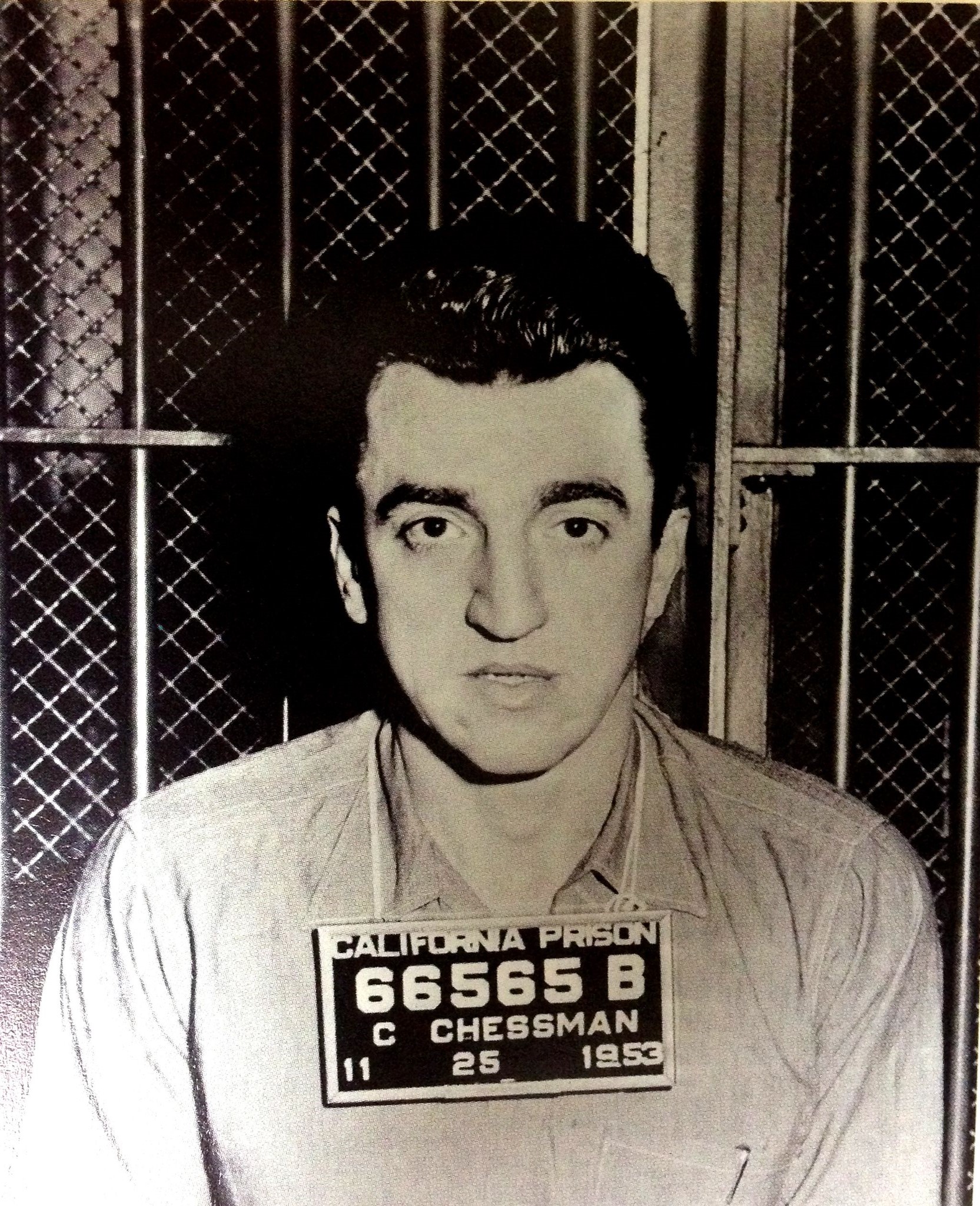
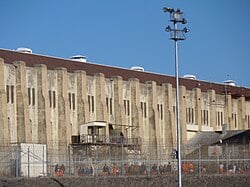
Caryl Chessman's story is one of the most extraordinary legal odysseys in American criminal justice history — a case that began with a dramatic arrest in Los Angeles in January 1948 and ended, twelve years later, with a controversial execution that ignited a national debate about capital punishment that has never fully subsided. Born in 1921 in Michigan, Chessman came to California as a young man and fell into trouble with the law. In early 1948, he was arrested as the suspected "Red Light Bandit" — a figure that Los Angeles investigators believed had been posing as a police officer, using a red spotlight to halt automobiles in secluded areas and robbing and assaulting the occupants. Chessman always insisted he was not the man responsible, and that insistence never wavered throughout the nearly twelve years he spent behind bars. The trial that followed was swift and, in some respects, deeply flawed. Convicted of multiple counts of robbery, kidnapping, and sexual assault, Chessman received two death sentences under a California law — the so-called Lindbergh-era rule — that allowed capital punishment for kidnapping when the victim was physically harmed, even without a murder conviction. The court's official transcript was incomplete because the court reporter died before the full record could be produced, a fact that would haunt the case in subsequent years. Throughout his time on death row, Chessman was permitted remarkable privileges: he was allowed to keep writing materials, and from his cell he produced four books, including the bestselling memoir "Cell 2455, Death Row," which transformed him into a national celebrity and focal point for death penalty abolitionists around the world. The scope of public attention that surrounded Chessman's case was unprecedented for a condemned prisoner. His books, written in a readable and often confrontational style, challenged the legal system's handling of his case and questioned whether the punishment truly fit the crimes for which he had been convicted. He attracted support from prominent writers, academics, and political figures — both in the United States and internationally — who argued that executing a man for crimes that did not include murder represented a failure of justice. The debate his case generated placed capital punishment squarely in the middle of American political discourse at a time when the country was already wrestling with questions of legal fairness and the limits of state power. Chessman's case also exposed fractures within California's legal infrastructure. He filed eight separate appeals and won eight stays of execution, each one buying him additional months or years of life while his legal team continued to press arguments about trial errors, inadequate counsel, and the disproportionate nature of the punishment. The final stay, granted by Governor Pat Brown in February 1960, carried a 60-day window. When it expired and the state legislature declined to commute the sentence, the machinery of execution resumed. At 12:26 a.m. on May 2, 1960, Caryl Chessman was executed in San Quentin's gas chamber — the last person to die in California's gas chamber before the state shifted to lethal injection in 1996. The execution itself was a national event. Crowds gathered outside San Quentin. Newspaper headlines carried the story across the country and overseas. For supporters of abolition, Chessman's death confirmed their worst fears about a justice system capable of putting a man to death for a non-homicide crime after a twelve-year legal process that had raised more questions than it answered. For others, the case represented a genuine legal tragedy: a convicted offender whose guilt or innocence was never fully resolved, whose trial record was incomplete, and whose fate became tangled in politics, media, and the cultural anxieties of a society still working through the moral limits of criminal punishment. The legacy of the Chessman case has outlasted the man himself. Legal scholars and historians have cited it as a watershed moment that energized the anti-death-penalty movement in ways that shaped the broader conversation about capital punishment through the 1960s and 1970s. The cyanide gas chamber that claimed his life was used only twice more after his execution before being permanently retired. California, which led the nation in executions through the mid-twentieth century, has not executed anyone since 2006, and the Chessman case is routinely cited in ongoing debates about whether the state's death penalty system is ever likely to be used again. What makes Chessman's story especially significant for a true-crime audience is not simply the notoriety or the controversy — it is the questions the case leaves unanswered and the uncomfortable truths it exposes about the capacity of a legal system to impose an irreversible punishment while the moral and factual foundations of that punishment remain genuinely contested. He maintained his innocence to the end. He used his time on death row to write himself into history, turning a criminal case into a constitutional crisis. And on May 18, 1948 — the date that anchors this issue — a California court imposed the sentence that set all of it in motion, beginning a twelve-year journey that would make Caryl Chessman a name synonymous with the debate over whether the state should ever have the power to take a life in the name of justice.

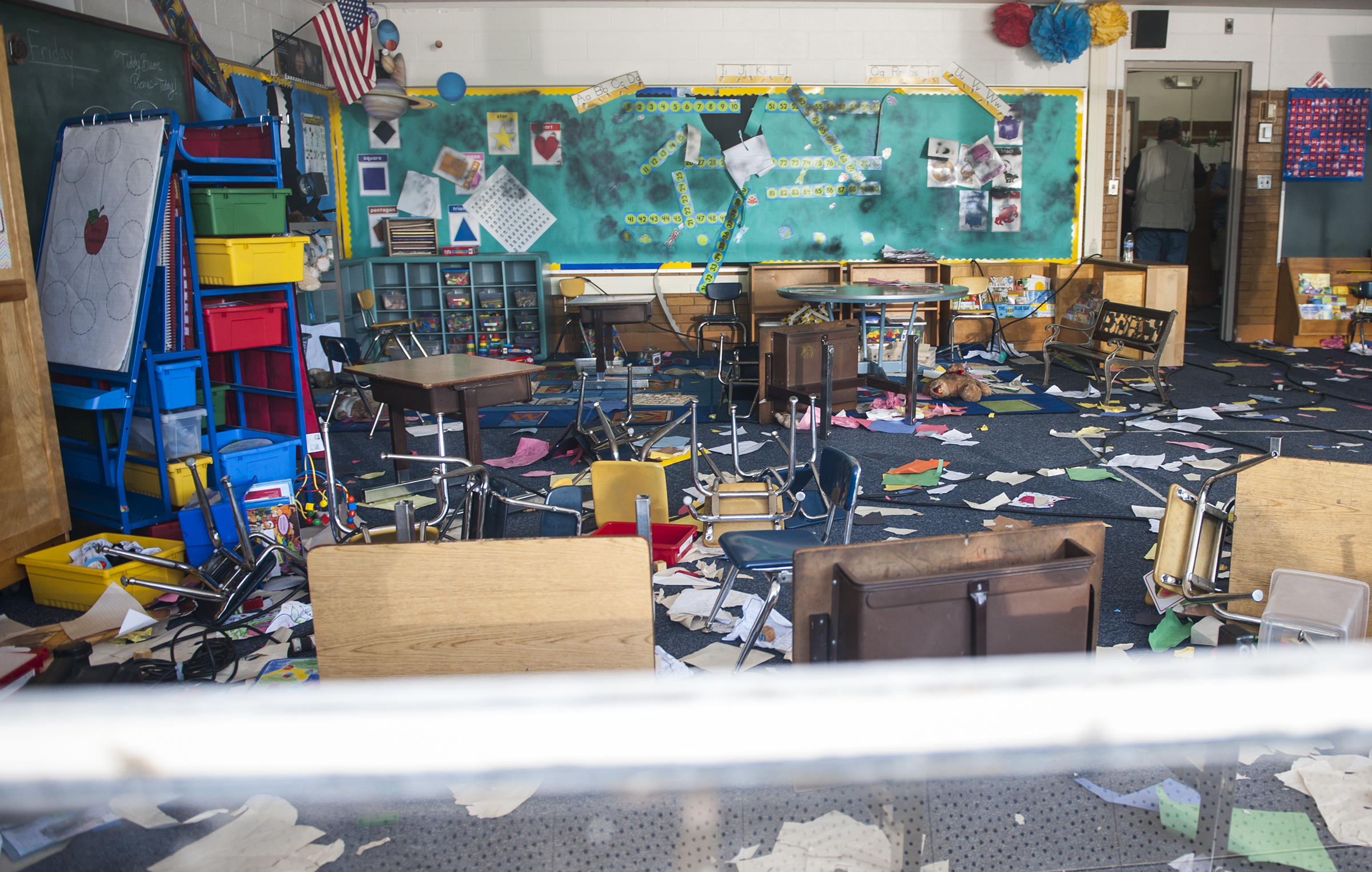
The Cokeville Elementary School bombing remains one of the most extraordinary survival stories in American school safety history. On May 16, 1986, David and Doris Young took 154 children and adults hostage at the elementary school in rural Cokeville, Wyoming. What unfolded over two and a half hours tested the limits of human courage and quick thinking—and resulted in a death toll of only two: the perpetrators themselves. David Young had served as Cokeville's town marshal in the 1970s but was dismissed after his six-month probationary period. He developed an elaborate personal philosophy he titled "Zero Equals Infinity" and conceived a ransom scheme he called "the Biggie"—targeting $2 million per hostage. He built a crude but devastating explosive device using a two-wheeled shopping cart, gasoline jugs, and an aluminum powder and flour mixture. His own teenage daughter, Princess Young, refused to participate in the plan and reported it to town hall authorities—but by then, it was already too late. At 1:00 PM on May 16, David and Doris Young arrived at the school. Two local men, Gerald Deppe and Doyle Mendenhall, were handcuffed outside but refused to enter. The couple then walked into the school and initiated the hostage-taking, holding 136 children and 18 adults captive in a single classroom. For nearly two and a half hours, the hostages endured increasingly desperate conditions. The Youngs had wired the room with their improvised bomb, built around the shopping cart explosive. The device was designed to ignite the gasoline and powder mixture, creating a devastating blast and fireball. The hostages faced not only the threat of the bomb but also the heat and suffocating fumes that built up as negotiations stalled. The critical turning point came through the calm, decisive action of a teacher who had already moved most of her students from the classroom to the gymnasium before the situation turned violent. When the bomb finally detonated at approximately 3:30 PM, the explosion tore through the classroom in a roar of flame and smoke. The blast itself was catastrophic to the room—but it was contained. Because of that earlier evacuation, 152 hostages were already out of harm's way. When emergency responders arrived, they found a scene of chaos and remarkable resilience. Of the 154 hostages, 79 sustained injuries—78 from bomb-related trauma and one from a gunshot wound that one of the perpetrators had fired. Miraculously, every single hostage survived. David and Doris Young were the only fatalities. The evacuation through the gymnasium became the stuff of school safety legend. The quick thinking that moved those children to safety transformed what could have been the deadliest school attack in American history into a story of survival against all odds. The failure of the bomb to fully detonate—attributed to a gasoline leak and faulty blasting caps—also contributed to the survival of the majority of hostages. Cokeville, a small ranching community of roughly 500 people then, was forever changed. Survivors and witnesses described years of psychological struggle, and the community's memory of that day remains both a testament to human resilience and a reminder of lasting trauma. The case became a landmark in school safety studies, influencing active-shooter and hostage crisis protocols nationwide. The legal outcome was straightforward: both perpetrators died in the blast, leaving no one to prosecute. The legacy of Cokeville endures not as a story of failure, but of survival—152 lives saved by a single teacher's calm in the face of disaster. It stands as one of the most compelling arguments for proactive emergency planning in schools, and a quiet reminder that even in the worst moments, human decision-making can rewrite the outcome.
At 8:35 p.m. on May 22, 1962, Continental Airlines Flight 11 — a Boeing 707 registered N70775 — departed O'Hare International Airport in Chicago for Kansas City, Missouri, carrying 37 passengers and 8 crew. At approximately 9:17 p.m., an explosion ripped through the right rear lavatory. The blast severed the aircraft's tail section, sending the rear fuselage and engines detaching from the main body. The aircraft pitched nose-down in uncontrolled gyrations and struck an alfalfa field near Unionville, Putnam County, Missouri, at approximately 9:22 p.m. All 45 people aboard were killed — 44 dead at the scene, one who survived briefly died of internal injuries at Saint Joseph Mercy Hospital in Centerville, Iowa, about ninety minutes later. The perpetrator was Thomas G. Doty, a 34-year-old Kansas City man who had purchased more than $300,000 in life insurance — including policies bought at the airport just before boarding — to provide for his wife and five-year-old daughter. He brought six sticks of dynamite aboard in his briefcase, entered the lavatory, and ignited the device. The scheme was intended to appear as a genuine accident, with his family collecting the insurance payout. The crash was the first confirmed commercial aviation suicide bombing in U.S. history. The FBI investigation identified Doty as the bomber within days based on insurance records, passenger manifests, and the pattern of the explosion in the rear lavatory. The case reshaped commercial aviation security protocols around insurance verification and passenger screening. Captain Fred R. Gray, 50, was among the victims. The memorial installed in Unionville, Missouri in 2010 bears the inscription: "This Continental Flight 11 tragedy occurred in Putnam County on May 22, 1962, and changed America's air travel forever."
0 verified · 0 unverified · 1 claims total
On the morning of May 24, 1961, a Greyhound bus pulled into the Jackson Greyhound station in Mississippi carrying a group of civil rights activists who had come to test a landmark federal ruling. By the end of that day, 27 people had been arrested for "disturbing the peace" — the first wave of what would become a summer-long campaign that would ultimately see more than 300 Freedom Riders arrested in Mississippi as subsequent buses continued to arrive. The arrests marked the point at which the Freedom Riders' campaign became impossible to ignore, drawing national attention to the gap between federal law and Southern enforcement, and setting the stage for federal intervention that would eventually desegregate interstate bus travel across the South. The 1961 Freedom Rides were originally conceived and organized by the Congress of Racial Equality (CORE), with its National Director James Farmer planning the initial campaign. The first 13 riders departed Washington on May 4 under CORE's sponsorship. When that initial group was stopped — their buses firebombed in Anniston, Alabama and riders beaten in Birmingham — Nashville student activists from SNCC, led by Diane Nash, stepped in to continue the rides, organizing fresh waves of riders to board the buses and keep the campaign alive. The Student Nonviolent Coordinating Committee (SNCC) had not originally planned the rides, but its Nashville student chapter provided the critical reinforcements that prevented the campaign from stalling after the Alabama violence. By May 1961, the Supreme Court's 1960 decision in Boynton v. Virginia had already ruled that segregated interstate bus travel was illegal. Southern states were openly refusing to enforce the federal ruling. Riders knew they were walking into coordinated violence and were prepared to accept it. The Greyhound station in Jackson was the focal point for the May 24 arrests. Riders who had survived firebombed vehicles and beatings by white mobs arrived in Jackson expecting further violence. Instead, they found Mississippi highway patrolmen waiting — and a strategy that swapped mob violence for mass arrests. The "jail no bail" tactic became one of the movement's most powerful tools. Activists refused to pay fines or accept suspended sentences. They stayed in custody, drawing out the legal process and flooding Mississippi's prison system. The images of well-dressed students and ministers submitting peacefully to arrest created a stark contrast with the law enforcement apparatus processing them. National newspapers and television broadcasts carried the story. Members of Congress who had been unmoved by abstract civil rights arguments found themselves confronted with photographs of their own constituents being dragged off buses. The Mississippi State Penitentiary at Parchman became a destination for the overflow. Activists were held in isolation, denied bail hearings, and subjected to pressure to sign pledges that they would not continue riding. Almost none did. New riders arrived to take their place. The campaign also drew clergy and older activists who brought different kinds of visibility to the cause. Among those arrested on May 24 were members of the Congress of Racial Equality (CORE) and religious workers who had traveled from the North specifically to participate. Their arrests gave the movement a demographic breadth that broadened its appeal beyond the college campuses where SNCC had begun. By late May, with the rides continuing and the violence intensifying, the Kennedy administration faced a choice: enforce the federal rulings or allow a breakdown of order in the Deep South. The Interstate Commerce Commission eventually issued regulations requiring desegregation of all interstate bus facilities. The first major federal enforcement of the bus desegregation rulings came in September 1961 — months after those May arrests in Jackson. The riders who walked into that Mississippi station on May 24, 1961 faced arrest rather than the firebombs that had destroyed their vehicles in Alabama. It was, in its own way, a measure of how the campaign had escalated: Mississippi chose the legitimacy of mass arrest over the illegitimacy of mob violence — at least in the open light of day. The outcome, in either case, was the same. The riders were willing to accept it.
The shooting of George Wallace was both an attempted assassination and a turning point in a bitter presidential campaign shaped by civil-rights backlash. A campaign-rally attack in Laurel, Maryland, ended Wallace's 1972 run as a serious national force while leaving unresolved questions about how to remember a politician whose later appeals for forgiveness never erased the harm of his segregationist politics.
0 verified · 0 unverified · 1 claims total
John Spenkelink was born March 29, 1949 in Le Mars, Iowa. He escaped from a California prison in 1972, where he was serving a sentence for armed robbery. On February 4, 1973, the 24-year-old Spenkelink picked up 24-year-old Joseph Szymankiewicz as a hitchhiker and checked into a hotel in Tallahassee, Florida. The two had apparently been engaged in a robbery spree together. After a heated argument at the hotel, Spenkelink left to heat a meal, returned, and shot Szymankiewicz in the back and beat him with a hatchet. Szymankiewicz died. At trial, Spenkelink claimed he acted in self-defense — asserting that Szymankiewicz had stolen his money, forced him to play Russian roulette at gunpoint, and sexually assaulted him. The prosecution disputed this account, presenting evidence that an eyewitness said both men were involved in the shooting. The jury convicted Spenkelink of first-degree murder and sentenced him to death. The self-defense claim was rejected. Spenkelink did not waive his appeals. He pursued every available legal avenue over the following years, maintaining his innocence throughout. Governor Bob Graham, under intense pressure from national civil rights organizations, religious groups, and anti-death penalty activists, declined to intervene. On the morning of May 25, 1979, Spenkelink was executed by electric chair at Florida State Prison in Starke, Florida. He was 30 years old. His final statement reportedly expressed hope that his death would help bring an end to the death penalty. Spenkelink was the first person executed in the United States against his will after the Supreme Court's 1976 reinstatement of capital punishment. Earlier post-reinstatement executions involved men who had waived their appeals. Spenkelink's case became a flashpoint for the national death penalty debate — exposing regional divides, accelerating advocacy on both sides, and foreshadowing the racial and socioeconomic disparities that would come to define American capital punishment in the decades that followed. His case is cited by death penalty scholars and abolitionists as the opening moment of the modern American execution era — not because of the crime itself, but because of what his involuntary death represented: the state taking a life over the individual's final objections.
0 verified · 0 unverified · 1 claims total
Lizzie Andrew Borden died on June 1, 1927, at the age of 66 in Fall River, Massachusetts — nearly 34 years after her acquittal in the 1892 axe murders of her father and stepmother. The death certificate listed pneumonia as the cause. She had undergone gallbladder surgery the previous year and had been in declining health. Her sister Emma, who had shared the family home at 92 Second Street before their estrangement, died nine days later in Newmarket, New Hampshire, at age 76 from chronic nephritis. The acquittal in 1893 did not shield Lizzie from public suspicion. She continued to live in Fall River, largely withdrawn from society. After the trial, she began using the name Lizbeth A. Borden — a detail that appears in her 1926 will and in probate records identifying her as "Lizbeth A. Borden otherwise called Lizzie A. Borden." She never married. After her father's death, the estate passed to her and Emma, and the sisters eventually moved from Second Street to Maplecroft on French Street. Pre-murder tensions had centered on Andrew and his wife Abby, and on family money, but the sisters themselves remained close through the trial and into the early 1900s; their estrangement developed later, around 1905, when Emma left Maplecroft. The split was never fully reconciled before Emma died in June 1927, just nine days after Lizzie. The murders themselves had occurred on the morning of August 4, 1892, when Andrew Borden and his wife Abby were struck multiple times with an axe in the family home. Lizzie, who was home at the time, claimed to have no knowledge of the killings. She reported finding her father's body to a neighbor. The investigation quickly centered on her. She was arrested and tried in New Bedford in June 1893, with Fall River excluded from the jury pool, and ultimately acquitted. The trial lasted two weeks. She never explained what happened that morning. After her acquittal, Lizzie faced an uncomfortable life in Fall River — a city that had largely concluded she was guilty despite the verdict. She and Emma eventually moved from Second Street to Maplecroft on French Street, but the sisters' relationship, which had frayed after 1905, never recovered. At her death in 1927, the obituaries noted the acquittal and the enduring controversy with equal weight, as if unable to fully commit to either framing. She was buried at Oak Grove Cemetery in Fall River beside her father and stepmother. Her death certificate recorded the cause as pneumonia, following a period of illness that had begun after her gallbladder operation the prior year. The 1892 murders remained officially unsolved. No one was ever convicted. The case remains one of the most analyzed in American criminal history, with endless retellings that have never produced consensus on what actually happened on the morning of August 4, 1892.
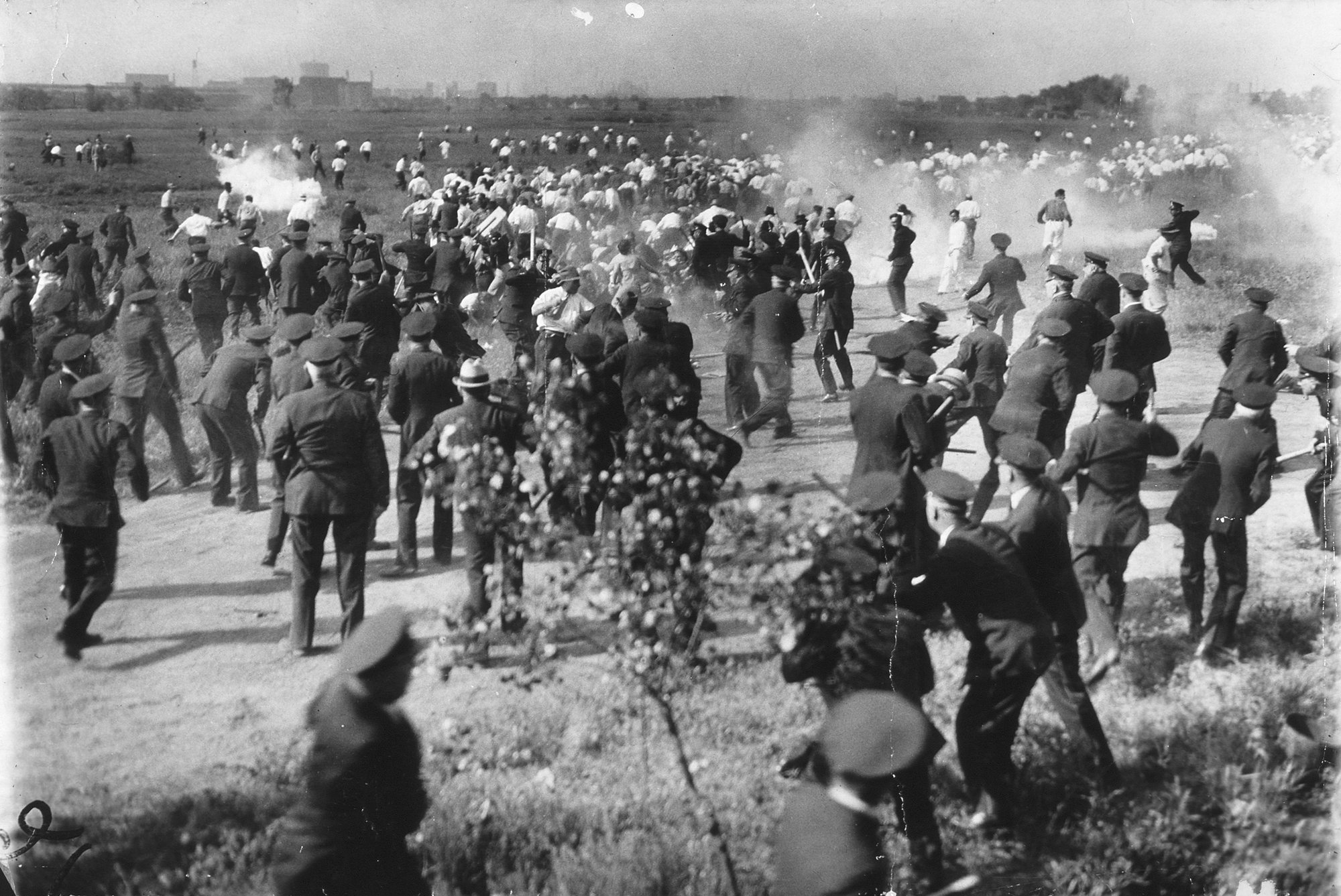
By the spring of 1937, American industry was at the center of a fundamental confrontation over whether industrial workers would have the right to organize. The Congress of Industrial Organizations, known as the CIO, had won a landmark agreement from United States Steel earlier that year, securing union representation and better conditions for thousands of workers. But the smaller steel companies — collectively known as Little Steel — refused to follow suit. Republic Steel, formed in 1935 by a consortium of smaller producers, was among the most resistant. Workers at Republic Steel's mills, frustrated by the company's refusal to match the terms U.S. Steel had accepted, voted to join the Steel Workers Organizing Committee, the CIO's labor arm, and began pressing for recognition. The company responded with layoffs, surveillance of suspected union supporters, and the deployment of private security forces. The strike that followed lasted months. By late May 1937, picketing had become a daily presence at Republic Steel's South Chicago plant. On Memorial Day — May 30 — the union organized a larger demonstration and picnic, drawing workers and their families to the site. Contemporary reports and later La Follette Committee investigations placed the crowd at between 1,500 and 2,500 people. They gathered near the Republic Steel plant and began a procession toward the facility's main gate. The event was peaceful in its early stages; marchers carried American flags and signs supporting union recognition. Approximately 264 Chicago Police officers were already on scene. The officers moved to block the procession, and the confrontation escalated quickly. Police cut through the crowd and opened fire without warning. Ten workers were killed — four died at the scene, and six more died later from their injuries. More than ninety workers were wounded and taken to the hospital; nine were left permanently disabled by beatings. The violence was witnessed and later documented by Dorothy Day, the labor activist and journalist, whose reporting brought additional attention to what had occurred. Newsreel footage of the confrontation was filmed but later suppressed by Paramount, limiting its public distribution. The La Follette Committee — formally the Senate Civil Liberties Committee — conducted an investigation into the incident and the broader climate of employer resistance to union organizing during the New Deal era. Chaired by Senator Robert La Follette Jr., the committee documented the use of excessive force against labor demonstrators and examined the relationships between steel companies, local law enforcement, and private security operations. Its findings, published as part of a broader examination of employer interference with workers' rights, provided one of the most comprehensive official records of the event and its context within the Little Steel strike. A coroner's jury subsequently ruled the killings a "justifiable homicide." No police officers were ever prosecuted for the deaths. The decision drew criticism from labor advocates and civil libertarians who saw it as evidence of judicial deference to law enforcement in labor disputes. The absence of accountability became a recurring theme in discussions about the treatment of labor organizing efforts by municipal authorities across industrial America. The Memorial Day Massacre became one of the most violent confrontations in American labor history. It intensified public debate over labor rights, the role of law enforcement in labor disputes, and the responsibility of the federal government in protecting workers' ability to organize. For many observers, the event underscored the gap between the protections theoretically afforded to workers under the Wagner Act and the reality of enforcement on the ground, particularly in states where local authorities aligned with industrial interests. The Wagner Act — the National Labor Relations Act — had been signed into law in July 1935, two years before the massacre. In theory, it guaranteed workers the right to organize and required employers to bargain in good faith. In practice, Little Steel companies including Republic Steel had simply refused to comply, betting that federal enforcement would not reach them. The Memorial Day Massacre exposed that gap between legal protection and ground-level enforcement in ways that proved difficult to ignore. A memorial plaque dedicated on May 30, 1967 — the thirtieth anniversary of the massacre — was installed near the site of the shooting at 11731 South Avenue O, ensuring the event was not entirely forgotten. The Memorial Day Massacre remains a reference point in discussions of the long struggle for labor rights in the United States, particularly in the context of government and employer resistance to collective bargaining. The incident took place at the Republic Steel plant in South Chicago, Illinois, on May 30, 1937.
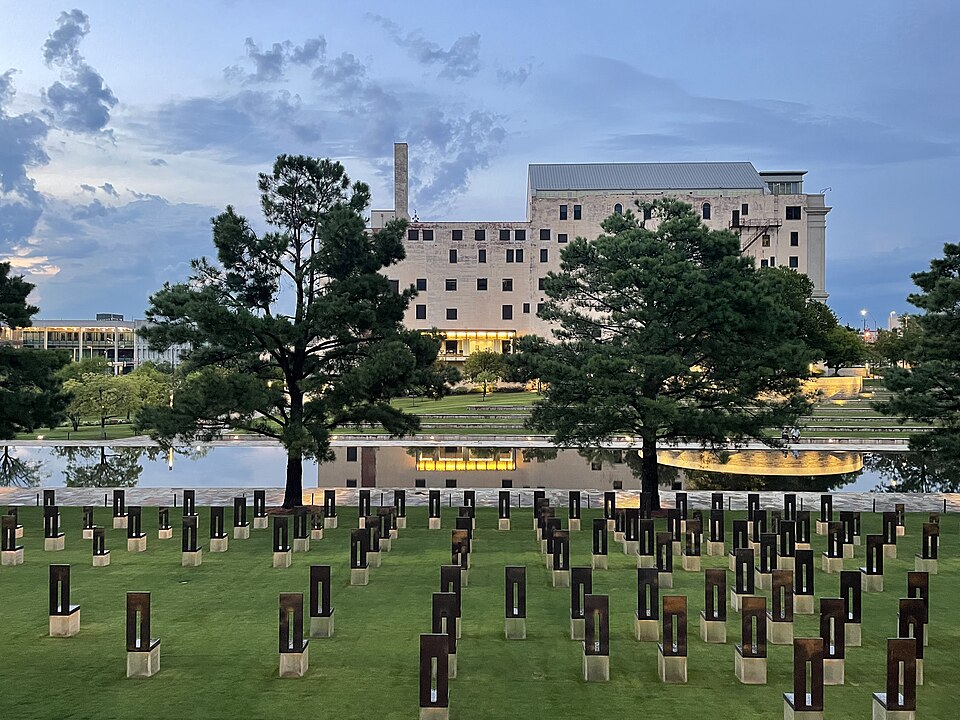
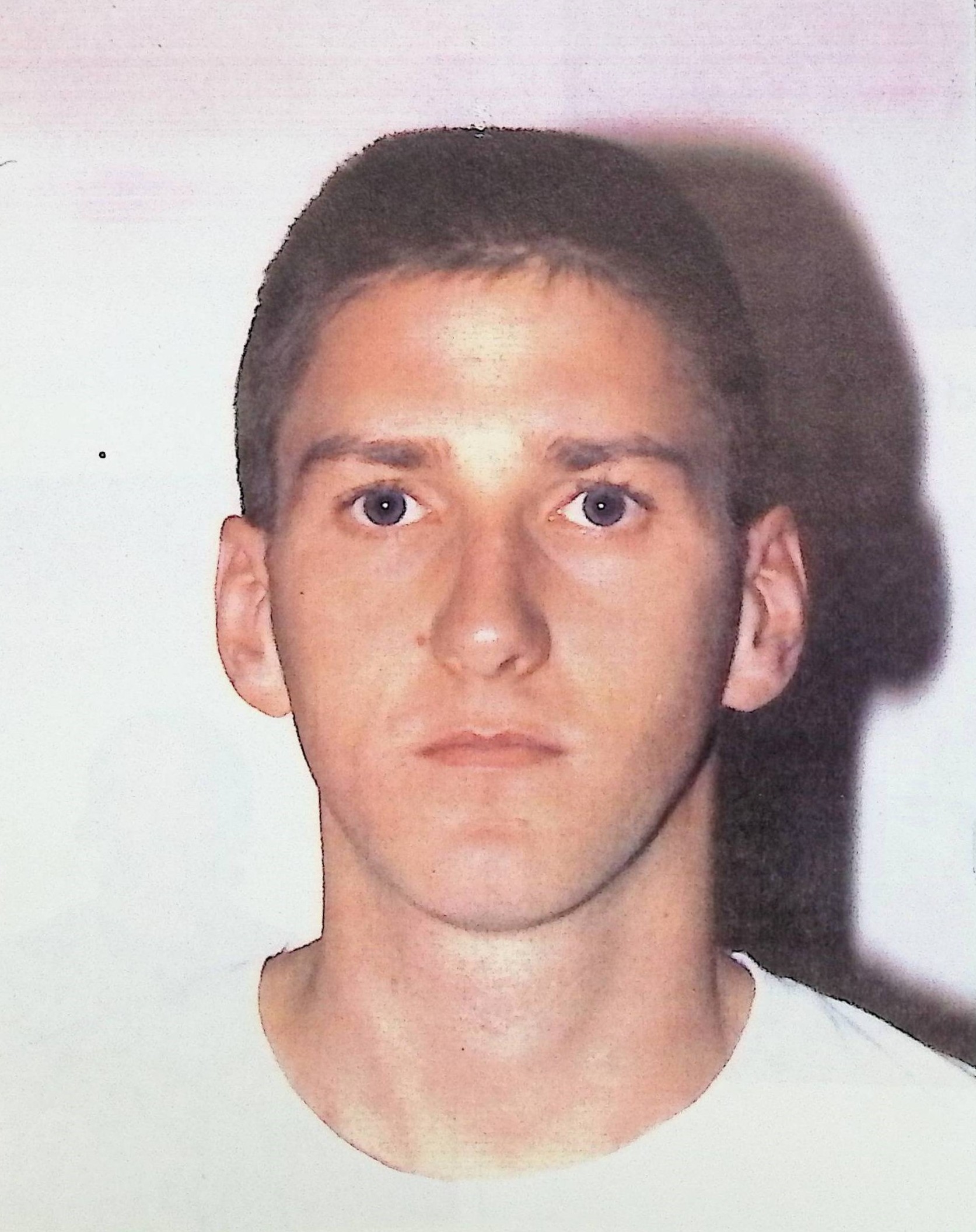
Terry Nichols was born April 1, 1955, in Michigan. He served in the U.S. Army and later worked as a military surplus dealer in Kansas before becoming entangled with Timothy McVeigh in the early 1990s. On April 19, 1995, a Ryder truck bomb detonated outside the Alfred P. Murrah Federal Building in Oklahoma City, killing 168 people and injuring more than 500. Investigators quickly identified McVeigh and Nichols as suspects. McVeigh was arrested within 90 minutes of the bombing; Nichols was taken into custody two days later at his mother's home in Michigan. The prosecution argued that Nichols had helped McVeigh acquire materials for the bomb and had been present when it was assembled. Michael Fortier, a friend who had been told of the plan in advance, testified for the government. He stated that Nichols had helped obtain materials and was present during part of the preparation. Nichols maintained he was unaware of the attack. The federal trial began in 1997 in Denver, Colorado, after Judge Richard Matsch ruled that Oklahoma City itself was too contaminated by grief and bias to host proceedings. On December 23, 1997 — nearly 21 months after the bombing — the jury found Nichols guilty of conspiracy to use a weapon of mass destruction and eight counts of involuntary manslaughter. He was acquitted of first-degree murder and additional bomb-related charges. Jurors could not reach agreement on the death penalty — a requirement under federal law for that sentence to be imposed. Three years after the April 19, 1995 bombing — on June 4, 1998 — Judge Matsch sentenced Nichols to life in prison without the possibility of parole, along with restitution ordered at $14.5 million. In his sentencing remarks, Judge Matsch called Nichols "an enemy of the Constitution" — a man who had aligned himself with a terrorist cause and allowed the machinery of conspiracy to operate unchecked. Nichols did not speak at his sentencing. His defense attorney, Michael Tigar, argued that his client had been manipulated by McVeigh and was not a willing participant in the planning. The argument did not change the outcome. A separate state prosecution in Oklahoma resulted in 161 consecutive life sentences in 2004. Nichols is currently incarcerated at ADX Florence, the federal supermax prison in Colorado — the same facility where McVeigh was executed on June 11, 2001. He remains there. The June 4, 1998 sentencing closed the federal criminal phase of the Oklahoma City bombing cases. It arrived on an anniversary that survivors and victims' families had long dreaded. For many, the life sentence represented justice; for others, it was a fraction of what they had lost. The deadlocked jury on the death penalty reflected the same uncertainty that has always shadowed this case — about how to weigh a conspiracy conviction against the full weight of 168 deaths, and about what accountability for terrorism on American soil ultimately requires.
On May 10, 1849, a theatrical rivalry turned violent when police and militia fired on a crowd of 10,000 at the Astor Opera House, killing 22–31 rioters in the deadliest civilian casualties since the Revolutionary War.
0 verified · 0 unverified · 1 claims total
On the morning of May 20, 2012, Nancy Judith Harris arrived at the Fina Whip-In convenience store in Garland, Texas, for her opening shift. She was 76 years old, a retired postal worker who had returned to part-time work at the store she had staffed for years, known to regular customers for her warm manner. That morning, her granddaughters were already making plans for their next "Nini Days" — the Friday tradition they kept, the dollar store trips and McDonald's runs they shared with the grandmother they called Nini. Matthew Lee Johnson entered the store shortly after Harris began her shift. Surveillance footage captured what happened next: Johnson, then 36, moved behind the counter and poured a bottle of lighter fluid over Harris's head while demanding money. After she opened the cash register, he took bills, coins, her ring, two cigarette lighters, and some cigarettes. Then he ignited the lighter fluid. Harris was engulfed in flames. She ran for the sink in the back, tried to remove her burning shirt, leaned over the basin — her shirt reignited. She ran outside, screaming. A nearby witness used a fire extinguisher to put out the flames. Police and paramedics found her with severe burns across her body. She was taken by helicopter to Parkland Memorial Hospital's burn unit in Dallas. Before she died five days later, on May 25, 2012, Harris gave police a description of her attacker: a heavy-set Black man with short dark hair and a chubby face. Within an hour of the attack, officers had Johnson in custody after a brief foot chase. He was found with the stolen cash and Harris's ring. Johnson had been born in Dallas County in 1975 and raised in a difficult household, mainly by brothers and cousins. His adult criminal record was extensive: car theft at 15, an arrest in 1994 for violently resisting police officers and biting one of them, a 2004 robbery conviction that sent him to prison for five years, and release in 2009. By 2011, he was arrested again, this time for theft from a former employer. At the time of Harris's murder, he was out on bond for that charge. He stood trial in Dallas County in October 2013. The surveillance footage formed the backbone of the prosecution's case. The defense argued that Johnson was under the influence of drugs and had not intended to kill Harris — only to scare her. They called his family members, his wife, and his former coworkers to testify about his drug addiction and childhood abuse, urging the jury to recommend a life sentence rather than death. The jury rejected the argument. Johnson was convicted of capital murder and sentenced to death. For the next twelve years, Johnson pursued every available appeal. His attorneys raised issues including the adequacy of his defense representation and the role his brain injuries and drug addiction played in the crime. They applied for clemency from the Texas Board of Pardons and Paroles. None of it succeeded. His execution date was set. On the morning of May 20, 2025, Nancy Harris's murder reached its 13th anniversary. That evening, at the state penitentiary in Huntsville, Texas, Matthew Lee Johnson was executed by lethal injection. He was 49 years old. His last words, addressed to Harris's family, who were present in the execution chamber, were an apology: "As I look at each one of you, I can see her on that day. I just please ask for y'all's forgiveness. I never meant to hurt her." It was the fourth execution in Texas in 2025, and one of two executions carried out in the United States on May 20, 2025. The other was Benjamin Ritchie, put to death in Indiana for killing Beech Grove Police Officer William Toney in 2000 — a second death penalty milestone on the same calendar date. Nancy Harris's family attended Johnson's execution. In the years between her death and his, they had spoken to reporters about the loss of a woman they described as devoted to her three granddaughters, a reader who kept up with her favorite shows, a neighbor who knew everyone on her street. Her daughter told the Fort Worth Star-Telegram that the execution did not bring closure — it simply ended a chapter in a story that would never return to normal. Harris was buried at Restland Memorial Park in Dallas, beside her husband, who had died before her. Johnson's execution closed the state's file on one of the more unusual convergence points in modern death penalty history: a crime and its punishment separated by exactly 13 years, falling on the same calendar date. Whether that symmetry brought any measure of meaning to Harris's family, or served any broader purpose in how the criminal justice system processes such cases, remains a question that outlasts both the victim and the man who killed her.
Five heavily armed robbers ambushed police in a 1980 bank robbery shootout in Norco, California, leading to one of the most intense firefights in U.S. law enforcement history.
0 verified · 0 unverified · 1 claims total
On the morning of April 19, 1995, a rented Ryder truck loaded with nearly 5,000 pounds of anhydrous ammonium nitrate fertilizer and fuel oil detonated outside the Alfred P. Murrah Federal Building in Oklahoma City, killing 168 people and injuring more than 680 others. It was the deadliest act of domestic terrorism in American history, and within hours all signs pointed to a domestic extremist with anti-government motives. Within two days, federal agents arrested Timothy McVeigh, a former Army soldier who had expressed fierce opposition to the U.S. government. He was ultimately convicted, sentenced to death, and executed — a legal arc that concluded on June 11, 2001. The investigation moved with unusual speed. FBI Director Louis Freeh placed the full weight of the bureau behind the case, and by April 21, 1995, agents had identified McVeigh through debris patterns, witness descriptions, and a receipt for the Ryder truck found at the scene. McVeigh was traveling with a co-conspirator, Terry Nichols, who was later tried and convicted on parallel charges. The bombing destroyed the north face of the nine-story building, demolishing a day-care center on the second floor and killing 19 children. The scale of casualties shocked a nation still raw from the World Trade Center bombing two years earlier. McVeigh's trial opened in Denver, Colorado, in April 1997 — the U.S. District Court for the Western District of Oklahoma had been damaged in the bombing and could not host proceedings. Jury selection took weeks; the trial itself lasted eight weeks. Federal prosecutors presented more than 900 witnesses and introduced thousands of exhibits. The central argument: McVeigh had acted alone in constructing and detonating the device, with Terry Nichols providing logistical support including the acquisition of the fertilizer. McVeigh's defense team argued he had acted under the influence of a larger antigovernment conspiracy. The jury rejected that theory entirely. On June 2, 1997, the jury found McVeigh guilty on all federal counts — a mix of charges that included conspiracy to use a weapon of mass destruction, murder of federal employees, and civil rights violations stemming from the deaths of the federal workers in the building. The verdict came just under 14 months after the bombing. Judge Richard Matsch sentenced McVeigh to death. He was executed by lethal injection at the U.S. Federal Correctional Complex in Terre Haute, Indiana, on June 11, 2001 — the first federal execution in 38 years. The case reshaped American counterterrorism policy and physical security standards for federal buildings. It exposed the vulnerability of civilian federal facilities and prompted the passage of the Minimum Interior Bombing Standards, which required certain federal buildings to withstand blast forces previously considered unlikely. The FBI's investigation, led by Floyd J. Clarke and later by additional senior officials, became a model for large-scale domestic terrorism responses. McVeigh's conviction and execution closed the most significant criminal chapter in the case, though the debate over whether the government adequately investigated potential co-conspirators continues in some academic and legal circles to this day. The June 2, 1997 conviction date became the anchor for the annual remembrance of the bombing. Each year on the anniversary, survivors, victims' families, and current federal employees observe the date as a marker not just of loss but of the legal system's final word on the crime.
0 verified · 0 unverified · 1 claims total
0 verified · 9 unverified · 9 claims total
0 verified · 0 unverified · 1 claims total