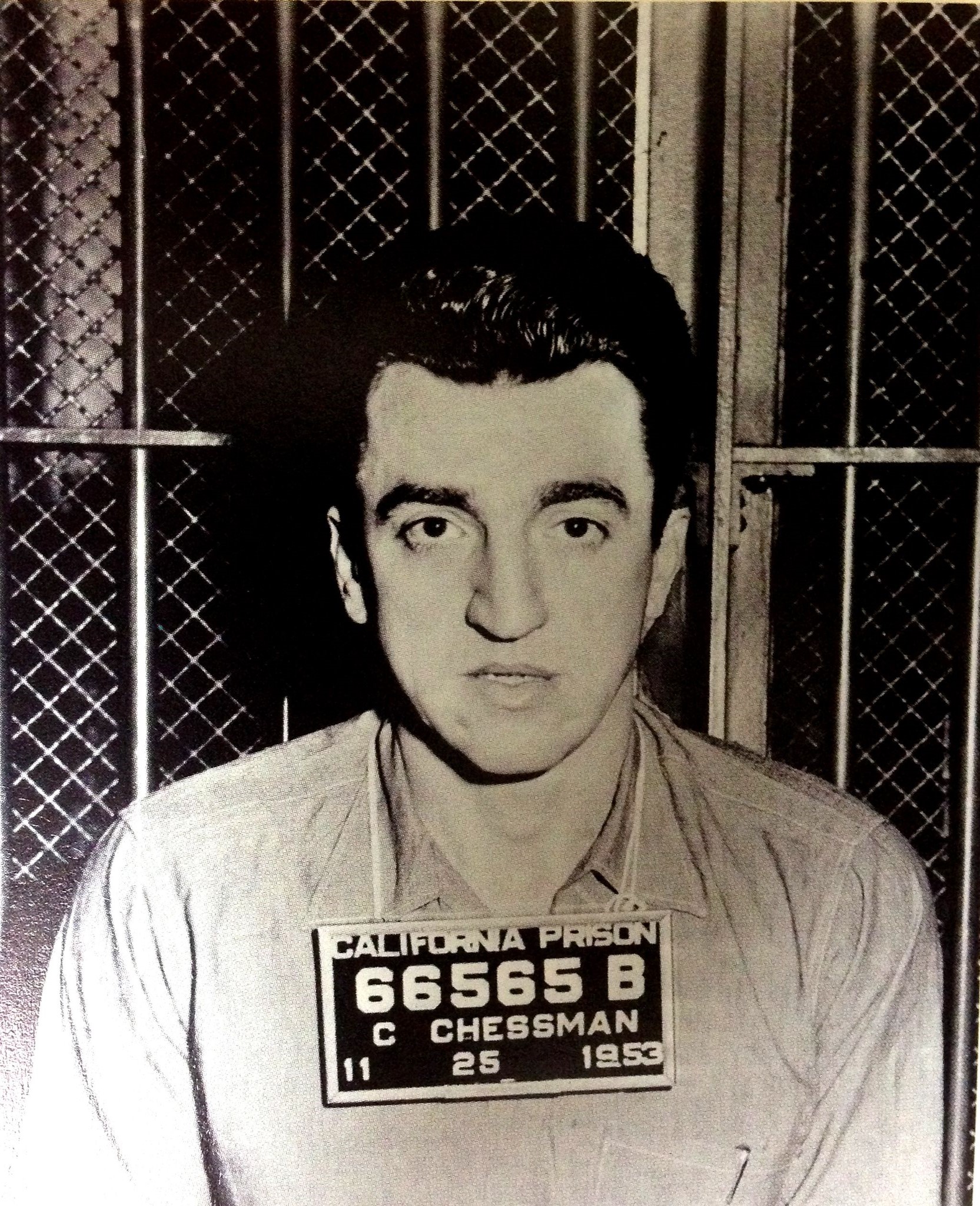
Caryl Chessman execution and death penalty controversy
closedUSJanuary 23, 1948 — May 2, 1960
6 claims
Not yet independently verified
Share
California Department of Corrections via Wikimedia Commonsunverified
Caryl Chessman's story is one of the most extraordinary legal odysseys in American criminal justice history — a case that began with a dramatic arrest in Los Angeles in January 1948 and ended, twelve years later, with a controversial execution that ignited a national debate about capital punishment that has never fully subsided. Born in 1921 in Michigan, Chessman came to California as a young man and fell into trouble with the law. In early 1948, he was arrested as the suspected "Red Light Bandit" — a figure that Los Angeles investigators believed had been posing as a police officer, using a red spotlight to halt automobiles in secluded areas and robbing and assaulting the occupants. Chessman always insisted he was not the man responsible, and that insistence never wavered throughout the nearly twelve years he spent behind bars.
The trial that followed was swift and, in some respects, deeply flawed. Convicted of multiple counts of robbery, kidnapping, and sexual assault, Chessman received two death sentences under a California law — the so-called Lindbergh-era rule — that allowed capital punishment for kidnapping when the victim was physically harmed, even without a murder conviction. The court's official transcript was incomplete because the court reporter died before the full record could be produced, a fact that would haunt the case in subsequent years. Throughout his time on death row, Chessman was permitted remarkable privileges: he was allowed to keep writing materials, and from his cell he produced four books, including the bestselling memoir "Cell 2455, Death Row," which transformed him into a national celebrity and focal point for death penalty abolitionists around the world.
The scope of public attention that surrounded Chessman's case was unprecedented for a condemned prisoner. His books, written in a readable and often confrontational style, challenged the legal system's handling of his case and questioned whether the punishment truly fit the crimes for which he had been convicted. He attracted support from prominent writers, academics, and political figures — both in the United States and internationally — who argued that executing a man for crimes that did not include murder represented a failure of justice. The debate his case generated placed capital punishment squarely in the middle of American political discourse at a time when the country was already wrestling with questions of legal fairness and the limits of state power.
Timeline
Claims
Each claim is sourced and shown by default. The mark beside it reads its status — a hollow ring (reported, awaiting review), a solid dot (human-verified), or an oxblood triangle (disputed). The numbered references point to the sources at the page bottom. Verification is human-only.
0 of 6 facts verified · help verify →
4 of 6 claims appear with their events on the timeline above.
Chessman was arrested in January 1948 as the accused "Red Light Bandit," a man who posed as a police officer using a red spotlight to stop couples in secluded Los Angeles areas. He was later convicted of multiple felonies tied to robberies, kidnappings, and sexual assaults, while continuing to insist that he was not the man responsible.[1, 2]
On May 2, 1960, after Governor Pat Brown's final reprieve expired and the Legislature declined to substitute life imprisonment for capital punishment, Chessman was executed in San Quentin's gas chamber. The moment landed far beyond one prison: it helped make the death penalty a durable political dividing line in California and a national symbol for abolition advocates.[1, 2]
Books, podcasts, articles, and films about this case — gathered as candidates and marked unverified until reviewed. These reflect each work’s own framing, not Case Bound facts or endorsements.