Cases
Loading cases…
Loading cases…
2 casesclear filters
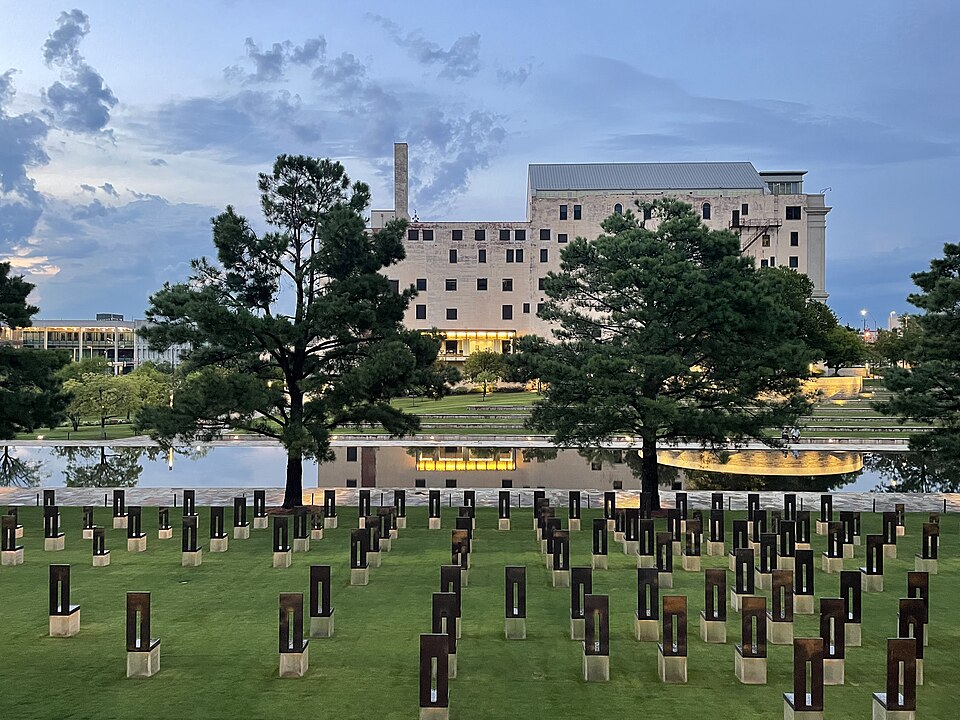
Terry Nichols was born April 1, 1955, in Michigan. He served in the U.S. Army and later worked as a military surplus dealer in Kansas before becoming entangled with Timothy McVeigh in the early 1990s. On April 19, 1995, a Ryder truck bomb detonated outside the Alfred P. Murrah Federal Building in Oklahoma City, killing 168 people and injuring more than 500. Investigators quickly identified McVeigh and Nichols as suspects. McVeigh was arrested within 90 minutes of the bombing; Nichols was taken into custody two days later at his mother's home in Michigan. The prosecution argued that Nichols had helped McVeigh acquire materials for the bomb and had been present when it was assembled. Michael Fortier, a friend who had been told of the plan in advance, testified for the government. He stated that Nichols had helped obtain materials and was present during part of the preparation. Nichols maintained he was unaware of the attack. The federal trial began in 1997 in Denver, Colorado, after Judge Richard Matsch ruled that Oklahoma City itself was too contaminated by grief and bias to host proceedings. On December 23, 1997 — nearly 21 months after the bombing — the jury found Nichols guilty of conspiracy to use a weapon of mass destruction and eight counts of involuntary manslaughter. He was acquitted of first-degree murder and additional bomb-related charges. Jurors could not reach agreement on the death penalty — a requirement under federal law for that sentence to be imposed. Three years after the April 19, 1995 bombing — on June 4, 1998 — Judge Matsch sentenced Nichols to life in prison without the possibility of parole, along with restitution ordered at $14.5 million. In his sentencing remarks, Judge Matsch called Nichols "an enemy of the Constitution" — a man who had aligned himself with a terrorist cause and allowed the machinery of conspiracy to operate unchecked. Nichols did not speak at his sentencing. His defense attorney, Michael Tigar, argued that his client had been manipulated by McVeigh and was not a willing participant in the planning. The argument did not change the outcome. A separate state prosecution in Oklahoma resulted in 161 consecutive life sentences in 2004. Nichols is currently incarcerated at ADX Florence, the federal supermax prison in Colorado — the same facility where McVeigh was executed on June 11, 2001. He remains there. The June 4, 1998 sentencing closed the federal criminal phase of the Oklahoma City bombing cases. It arrived on an anniversary that survivors and victims' families had long dreaded. For many, the life sentence represented justice; for others, it was a fraction of what they had lost. The deadlocked jury on the death penalty reflected the same uncertainty that has always shadowed this case — about how to weigh a conspiracy conviction against the full weight of 168 deaths, and about what accountability for terrorism on American soil ultimately requires.
The morning of June 22, 1964, Attorney General Robert F. Kennedy formally directed the FBI to take over a case that was already drawing national alarm. Three civil rights workers — Michael Schwerner, James Chaney, and Andrew Goodman — had vanished overnight in Neshoba County, Mississippi. They had last been seen leaving the Philadelphia, Mississippi jail at roughly 10:30 the previous evening. By dawn they were missing, and within hours the Department of Justice had committed the full weight of the federal government to finding them and finding out who was responsible. The three had come to Mississippi for Freedom Summer, the 1964 campaign in which thousands of civil rights volunteers descended on the state to register Black voters and challenge the systemic disenfranchisement that had endured for generations. Schwerner, 24, was a Jewish civil rights organizer from New York who had been working in Mississippi for months as a field director for CORE, the Congress of Racial Equality. Chaney, 21, was an African American activist from Meridian, Mississippi, who had been deep in the local voter registration effort. Goodman, 20, was a white anthropology student from New York who had arrived in Mississippi just days before his disappearance. On June 21, the three drove to the Longdale community in Neshoba County to investigate the arson of Mt. Zion Church — a fire set by white supremacists to intimidate the local organizing effort. On their way back, Deputy Sheriff Cecil Price pulled them over and arrested them on a charge of speeding. The charge was a pretext. Price held them in the Philadelphia jail for hours, and according to confessions later obtained from Klan members, he used that window to contact Edgar Ray Killen — a Baptist minister and local Ku Klux Klan leader — to coordinate what came next. When Price released the three men at around 10:30 that night, a group of KKK members was waiting. Chaney, Goodman, and Schwerner were murdered that night. Their bodies were buried in an earthen dam near the site where they were killed. For weeks, they were listed officially as missing. The FBI investigation launched on June 22 faced immediate and profound obstruction. Local law enforcement in Mississippi — including the Neshoba County sheriff — was implicated in the conspiracy. Witnesses were too frightened to come forward. Director J. Edgar Hoover authorized a massive deployment of federal resources: reportedly hundreds of agents, thousands of interviews conducted across the state, and long-term surveillance operations targeting the Klan's networks. A $25,000 reward — equivalent to roughly $250,000 today — eventually broke the case open. Informants who had been too afraid to speak began providing information about what had happened and where the victims had been buried. The bodies were recovered from the earthen dam. Confessions from KKK members Horace Doyle Barnette and James Jordan laid out the conspiracy in precise detail: the pretextual arrest, the deliberate timing of the release, the ambush by waiting Klansmen. By late November 1964, the FBI had compiled enough evidence to accuse 21 Mississippi men of engineering the conspiracy. The plot reached from the local Klan rank-and-file all the way into the Neshoba County sheriff's department. The case became a national flashpoint. President Lyndon Johnson met with the victims' families at the White House. On June 25, 1964, Walter Cronkite told his CBS Evening News audience that the disappearances had become "the focus of the whole country's concern." Mississippi's officials resented the outside attention, but the pressure was unrelenting. In 1967, a Mississippi state court convicted seven men in connection with the murders. The sentences ranged from three to twenty years — widely regarded as inadequate for crimes that had shocked the country. Most of those convicted reportedly served far less than the maximum. The case did not close there. Forty-one years after the murders, on June 21, 2005, Edgar Ray Killen — the Baptist minister who had planned the conspiracy — was convicted of three counts of manslaughter by the State of Mississippi. The Civil Rights Division of the Department of Justice and the FBI continued pursuing the full documented record of the conspiracy, culminating in a comprehensive investigation report issued in April 2023 that preserved every known detail of what had happened in Neshoba County in the summer of 1964. The murders of Chaney, Goodman, and Schwerner accelerated passage of the Civil Rights Act of 1964 and the Voting Rights Act of 1965. The federal government's response on June 22, 1964 — Kennedy's formal request, the Bureau's massive deployment, the refusal to let local complicity foreclose accountability — set a precedent for civil rights enforcement that would outlast the crimes that summoned it.
1 claim
Not yet independently verified
1 claim
Not yet independently verified