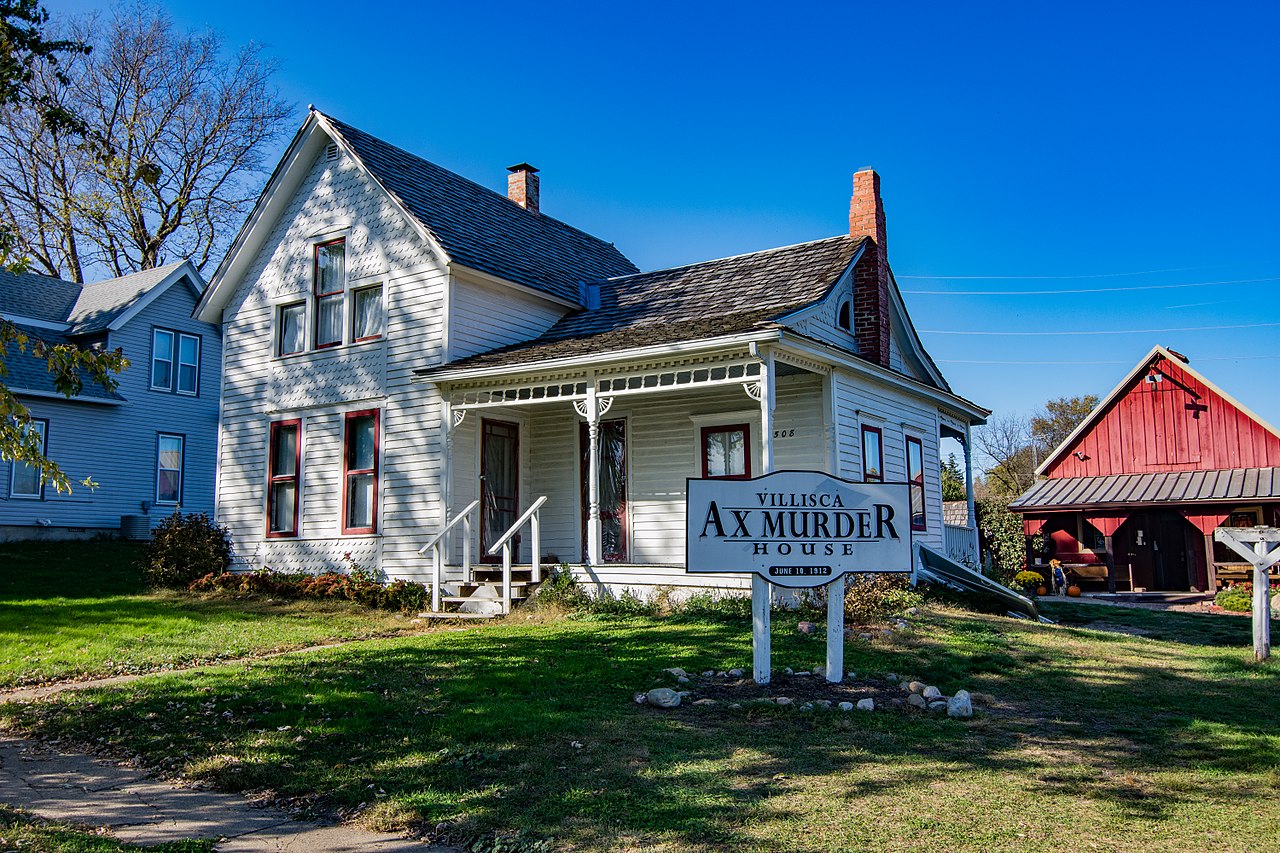
Josiah B. and Sara Moore House, Villisca, Iowa (NRHP) — via Wikimedia Commonsunverified
On the evening of Sunday, June 9, 1912, the Moore family of Villisca, Iowa walked home from a church children's program with eight people in their party and no reason to expect what was coming. Josiah Moore, 43, was a well-regarded businessman and deacon—a man with standing in this quiet Montgomery County town. His wife Sarah, 39, walked beside him. Their four children came along: Herman, 11; Mary Katherine, 10; Arthur, 7; and Paul, just five years old. Joining them for a sleepover were two sisters from the neighborhood: Ina May Stillinger, eight, and her sister Lena Gertrude, eleven, who had been invited by Mary Katherine to spend the night. The program had wrapped up around 9:30. By 9:45 or 10 o'clock that evening, all eight of them were inside the two-story frame house on East Second Street, doors closed against the summer dark.
None of them survived until morning.
The discovery came at approximately seven o'clock on June 10. Mary Peckham, the family's neighbor, had grown uneasy. The Moores were reliable people—up early, chores done, a household that ran on schedule. But that morning, nobody appeared. No sounds from the yard, no movement in the windows. Peckham alerted the town marshal, Henry Horton, who entered the home and moved from room to room. When Horton emerged, he reportedly told a Moore relative what he had found in plain terms: "Somebody was murdered in every bed."
Timeline
Claims
Each claim is sourced and shown by default. The mark beside it reads its status — a hollow ring (reported, awaiting review), a solid dot (human-verified), or an oxblood triangle (disputed). The numbered references point to the sources at the page bottom. Verification is human-only.
0 of 4 facts verified · help verify →
Henry Lee Moore — unrelated to the slain Moore family — was later convicted of the axe murders of his own mother and grandmother in a separate case occurring several months after the Villisca killings, leading some investigators to suspect a connection.[1, 2]
Reverend George Kelly was the only person ever tried for the Villisca murders; his first trial ended in a hung jury and the second in an acquittal.[1, 3]
Books, podcasts, articles, and films about this case — gathered as candidates and marked unverified until reviewed. These reflect each work’s own framing, not Case Bound facts or endorsements.