Cases
Loading cases…
Loading cases…
2 casesclear filters
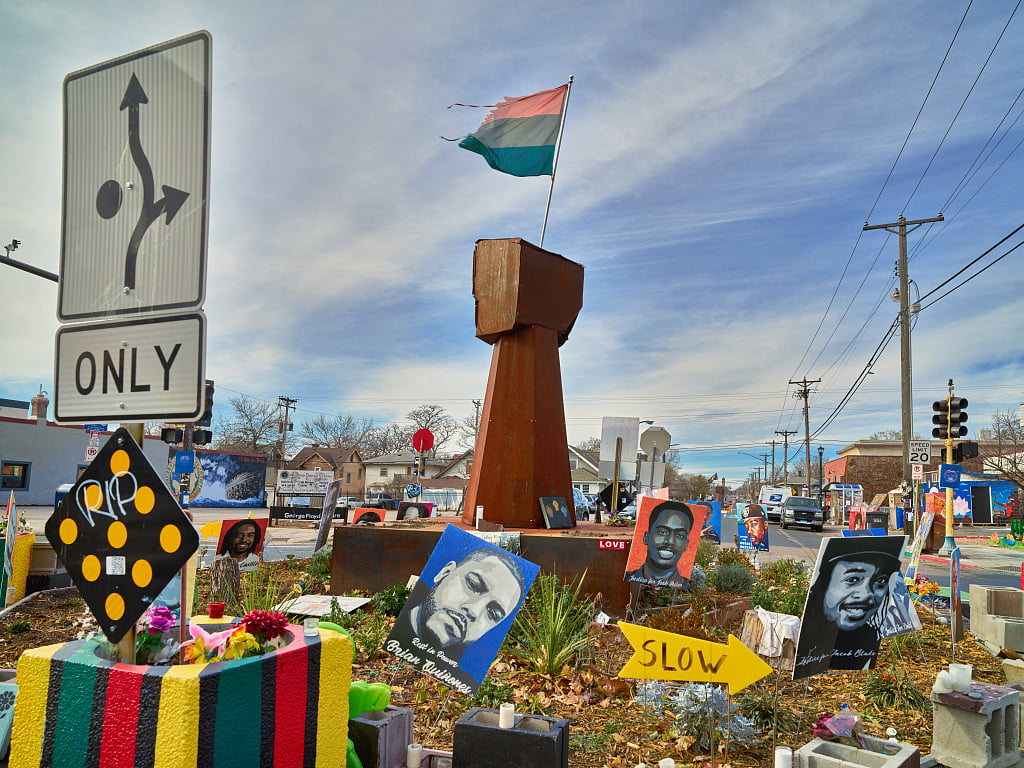
On the morning of June 25, 2021, Derek Chauvin stood before Hennepin County District Court Judge Peter Cahill and heard the number that would define the rest of his life: 22.5 years. In a proceeding broadcast live to millions of viewers around the world, the former Minneapolis police officer was sentenced to 270 months in state prison for the murder of George Floyd—one of the longest sentences ever imposed on a police officer in the United States for an on-duty killing. The road to that courtroom had begun exactly thirteen months earlier. On May 25, 2020, Minneapolis police were called to investigate a complaint, and Chauvin—a 19-year veteran of the department—arrived as one of four responding officers. What followed was captured by a bystander video that would circle the globe within hours: George Floyd, already handcuffed and lying face-down on the pavement, with Chauvin's knee pressed against his neck for approximately nine minutes and twenty-nine seconds. Floyd called out "I can't breathe" repeatedly. He called for his mother. Bystanders pleaded for Chauvin to stop. Floyd eventually went limp and was later pronounced dead. The footage ignited protests in all fifty states and in countries around the world—one of the largest civil rights uprisings in modern American history. Within weeks, Chauvin was charged with second-degree unintentional murder, third-degree murder, and second-degree manslaughter. The trial ran for three weeks in the spring of 2021. Jurors heard from medical experts, use-of-force specialists, and bystanders who had been present during the arrest—including a nine-year-old girl who described watching Floyd's death from the sidewalk. On April 20, 2021, the jury returned a verdict of guilty on all three counts. Given how rarely police officers face prosecution—let alone conviction—for on-duty conduct, the outcome stunned many observers who had braced for a different result. The sentencing hearing on June 25 carried its own weight. Prosecutors sought thirty years, arguing that Chauvin had abused his authority as a sworn officer, that Floyd had been particularly vulnerable—already restrained and in distress—and that children had been present during the arrest. Minnesota's sentencing guidelines would have recommended approximately 12.5 years for a first-time offender convicted of second-degree unintentional murder. The defense asked for a sentence at the low end of that range. Judge Cahill cited four aggravating factors in departing upward from the guidelines: Chauvin's abuse of his position as a police officer; Floyd's particular vulnerability as a restrained and distressed person in police custody; the presence of children during the arrest; and the fact that Chauvin continued his actions even as bystanders repeatedly begged him to stop. The judge also referenced a 2017 complaint in which Chauvin had used unreasonable force against a fourteen-year-old boy—a prior incident that had not resulted in criminal charges but suggested a pattern of conduct. Chauvin addressed the court—a rare occurrence, as he had declined to testify during his trial. Members of Floyd's family delivered victim impact statements describing the grief that had reshaped their lives. The sentence: 22.5 years, with credit for time served. The case did not end there. On December 15, 2021, Chauvin pleaded guilty in federal court to charges that he had willfully deprived George Floyd of his constitutional rights under color of law—violating Floyd's Fourth Amendment protection against unreasonable seizure and his right to medical care while in police custody. He was sentenced to 21 years in federal prison, to be served concurrently with the state sentence. The conviction and sentence landed at the center of a national debate about what police accountability actually means. Legal analysts pointed out that the outcome—driven by overwhelming video evidence, a thorough investigation, and extraordinary public attention—demonstrated that serious prosecution of officers was possible. Critics cautioned against reading it as systemic change: most incidents of police violence lack footage clear enough to convict; most never reach a courtroom. Reforms proposed in the wake of Floyd's death—restrictions on neck restraints, requirements for officers to intervene when colleagues use excessive force, changes to qualified immunity—remained contested across state legislatures and Congress in the years that followed. The memorial that grew at the site where Floyd died drew visitors from across the country. The sentence had been handed down. What it would mean for the thousands of future cases that lacked a nine-minute video and a watching world was the harder question left to answer.
1 claim
Not yet independently verified
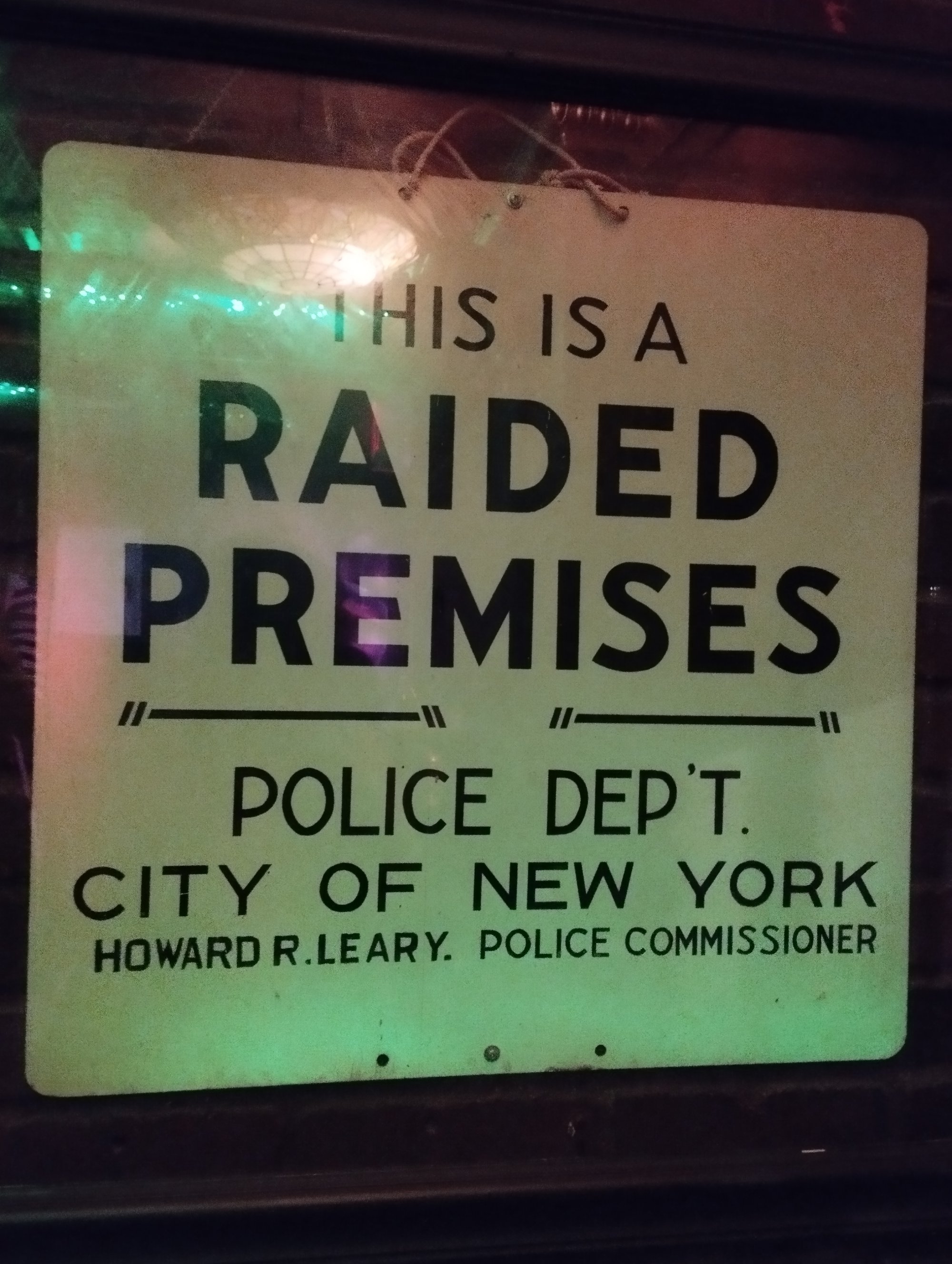
Just after 1 a.m. on June 28, 1969, officers from the New York City Police Department's Public Morals Section pushed through the doors of the Stonewall Inn at 53-57 Christopher Street in Greenwich Village. To the police, it was routine — a raid on a gay bar, a procedure they had run dozens of times across the city. To the people inside, it was one indignity too many. The Stonewall Inn was a modest establishment — no running water behind the bar, a jukebox, a small dance floor — operated by the Genovese crime family since 1967. The venue had only been a gay bar since 1966, converted from a restaurant and boarding house. For many of its patrons — young people rejected by their families, transgender individuals with few alternatives — it was one of the only places in the city where they could exist without the immediate threat of arrest or violence. Under the laws of the era, their presence was itself the offense. The American Psychiatric Association classified homosexuality as a mental disorder until 1973. Gay bars routinely lost their liquor licenses. Police used entrapment to arrest men simply for being there. Anyone wearing fewer than three pieces of gender-appropriate clothing could be taken in. Arrest records appeared in newspapers, destroying careers and families. The Mattachine Society, founded in 1950, and the Daughters of Bilitis, established in 1955, had advocated carefully and quietly for years — assimilationist strategies that drew minimal public attention. In 1965, activists had picketed the White House. The legal landscape had barely shifted. The standard procedure for a bar raid was compliance and dispersal. On June 28, 1969, that did not happen. As officers began loading arrested individuals into police vehicles on Christopher Street, a crowd gathered outside. A young woman — described by witnesses as a transgender individual or butch lesbian — was being roughly handled as she was guided toward a patrol car. She called out to the gathering crowd, demanding to know why no one was acting. The crowd began throwing coins, then bottles, then bricks. The officers, caught off guard by the intensity of the response, retreated back into the bar for their own safety. Confrontations continued for approximately six days. On Saturday night the crowd swelled to over 2,000 people. Protesters marched through Greenwich Village, chanting and clashing with police in running confrontations that extended into the early morning hours. Mimeographed flyers circulated announcing a "Gay Power" demonstration. The protests spread beyond Christopher Street as word moved through New York's gay community. Initial media coverage was often dismissive or sensationalized — focused on the theatrics of drag queens and fire extinguishers rather than the underlying pattern of systematic harassment that had produced them. But the images were unlike anything visible before: gay patrons fighting back against police in public, in plain view of the street. The movement that emerged was different from what had come before. New organizations — the Gay Liberation Front, the Gay Activists Alliance — formed in the months that followed, built around visibility and direct action rather than quiet negotiation. In December 1969, Craig Rodwell, owner of the Oscar Wilde Bookshop, proposed marking the first anniversary of the Stonewall raid with a march. The proposal was taken up by the Eastern Regional Conference of Gay Liberation Organizations. On June 28, 1970 — one year to the day — the first Christopher Street Liberation Day March drew an estimated 10,000 to 15,000 participants in New York City, with simultaneous demonstrations in Chicago and Los Angeles. That tradition spread worldwide over the following years. Gilbert Baker designed the rainbow flag in 1978 as its emblem. Legal victories accumulated over the decades that followed. The Supreme Court's 2003 decision in Lawrence v. Texas struck down sodomy laws nationwide. The "Don't Ask, Don't Tell" policy was repealed in 2011. The 2015 ruling in Obergefell v. Hodges made same-sex marriage legal across the country. None of that was visible on the morning of June 28, 1969, when a crowd on Christopher Street refused to comply. The Stonewall Inn had been raided before. The refusal was new.
1 claim
Not yet independently verified