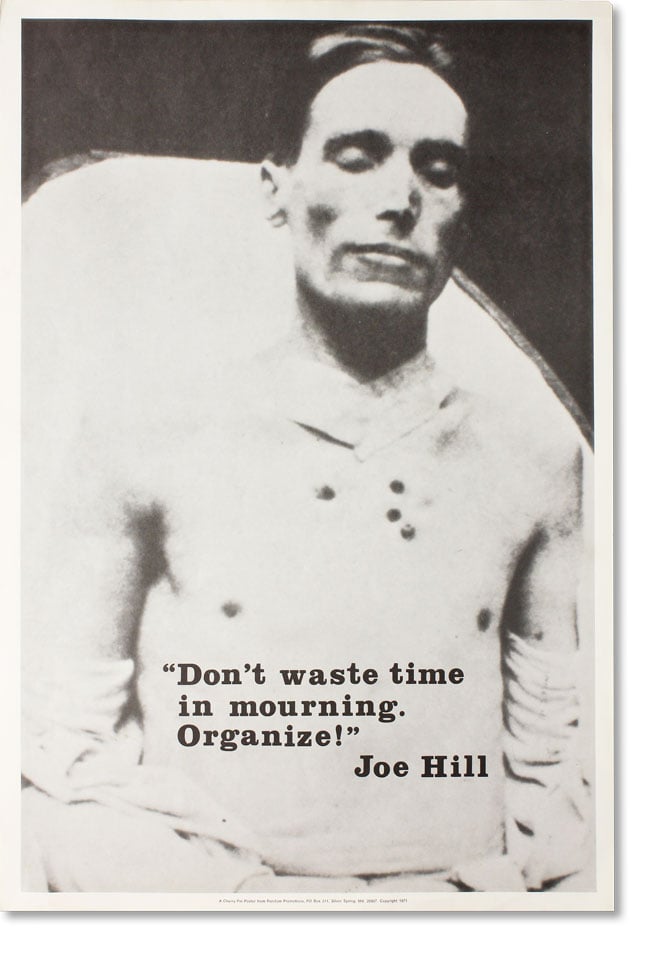
On July 8, 1914, a Utah jury delivered its verdict: Joel Emmanuel Hägglund — known to the American labor movement as Joe Hill — was guilty of murder in the first degree. The sentence was death. In a single stroke, the state of Utah transformed one of the Industrial Workers of the World's most gifted songwriters into something far more powerful: a martyr.
Hill had been born in Gävle, Sweden in 1879 and arrived in the United States in the early years of the twentieth century. He drifted through a string of itinerant jobs — laborer, miner, lumberman, longshoreman — before finding his calling not only as an organizer but as a songwriter. When he joined the IWW in 1910, the union already had a tradition of using music to spread its message, and Hill proved a rare talent. His anthem "The Preacher and the Slave" gave the language a permanent addition: "pie in the sky," a withering rebuke aimed at those who promised workers comfort in the next world while they starved in this one. "Casey Jones—the Union Scab," "The Rebel Girl," "There Is Power in a Union," "The Tramp" — Hill's songs traveled where organizers could not, sung in camps and bunkhouses across the country. By 1914 he was, by nearly every account, the most recognized Wobbly in America.
The charges against him grew out of a January 10, 1914 robbery at a Salt Lake City grocery store. The owner, John Morrison, and his son Arling were shot and killed during the attack. Hill was wounded that same night with a gunshot wound, and was subsequently arrested and charged with both murders. He refused throughout the trial to explain how he had been injured — a silence the prosecution used against him relentlessly. The evidence linking him to the Morrison killings was characterized by historical accounts as meager and tenuous at best: circumstantial, without corroboration, and shaped throughout by the hostility Utah bore toward immigrant labor radicals. His jury was composed, by most historical accounts, of conservative Salt Lake citizens who were not inclined to give a Wobbly the benefit of the doubt.