Cases
Loading cases…
Loading cases…
2 casesclear filters
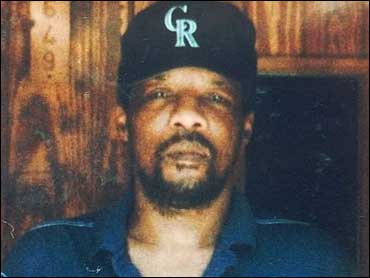
On the morning of June 7, 1998, James Byrd Jr. walked along a road in Jasper, Texas. He was 49 years old, a well-known figure in this small East Texas town, and he was looking for a ride home. Three white men in a pickup truck offered him one. It was a decision that would cost him his life. Byrd had been at a party the night before. By the early morning hours, he was walking alone on a dark stretch of road when King, Brewer, and Berry pulled alongside him. They said they would take him where he needed to go. Instead, they drove him to a remote, wooded area where the attack began. The three men beat Byrd severely. According to evidence presented at their trials, King and Brewer fractured his eye sockets and ribs, striking him with a wooden bat. Berry was present but played a lesser role. When the beating was done, the men chained Byrd's ankles to the back of their pickup truck and dragged him along the winding rural road — for nearly three miles. Shawn Allen Berry eventually cooperated with investigators and led them to what remained of the crime scene. That cooperation would be the reason he escaped the death penalty. King and Brewer, who initiated and carried out the worst of the violence, were tried together in February 1999. Both were convicted of capital murder and sentenced to death. Berry pleaded guilty to murder and received life in prison in exchange for his testimony against the other two. The case drew comparisons to the worst of the Jim Crow era — to lynching murders that had haunted the South for generations. Jasper, a town roughly divided between white and African American residents, was thrust into an uncomfortable national spotlight. Law enforcement officials described the crime scene as among the most disturbing they had encountered. Along the nearly three-mile stretch of road, investigators found blood, tissue, and personal belongings scattered in the wake of what had been done to Byrd's body. The murders of King and Brewer did not come quickly. Both remained on death row for more than two decades. Lawrence Russell Brewer was executed by the state of Texas on June 21, 2012. He showed no remorse. John William King was executed on July 17, 2019, bringing a measure of closure to Byrd's family and the Jasper community. Shawn Allen Berry remains incarcerated. The case became a catalyst for meaningful legal change. Before June 1998, Texas was one of only four states in the country without a hate crime statute. The outcry over Byrd's death changed that. In 2001, the Texas Legislature passed the James Byrd Jr. Hate Crimes Act, which took effect that September. The law allowed for enhanced penalties when a crime could be proven to have been motivated by bias against a victim's race, religion, color, disability, sexual orientation, national origin, or ancestry. In 2009, Congress passed the Matthew Shepard and James Byrd Jr. Hate Crimes Prevention Act, extending federal hate crime protections and adding gender, gender identity, and sexual orientation to the list of covered characteristics. In the years after the murder, Byrd's family and community members worked to transform grief into something constructive. They established the James Byrd Foundation for Racial Healing to support community healing, education, and efforts to combat racial hatred. Jasper created a park in Byrd's honor — a physical reminder in the town where he was killed. The questions raised by the case remain urgent decades later. The persistence of white supremacist ideology, the vulnerability of minority communities, and society's responsibility to confront hate-motivated violence are not problems that executions resolve. James Byrd Jr. was a friendly, helpful man who accepted a ride from strangers. His death — and the legislative legacy it left behind — continues to serve as one of the most significant hate crime cases in modern American history.
Mary Turner's name survives in the historical record because she refused to stay silent. In the spring of 1918, Mary and her husband Hayes Turner were living and working in Brooks County, Georgia, near the plantation of a white landowner named Hampton Smith. The Turners were among hundreds of Black farm families in the area caught in a system of coercive labor that historians have characterized as "slavery by another name" — a web of debt peonage, convict leasing, and economic dependence that gave white landowners near-total control over Black workers. When Hayes Turner threatened Smith in response to the severe beating his wife had received at Smith's hands, local authorities responded with the full weight of the all-white legal system. Hayes was arrested, convicted in a rapid proceeding, and sentenced to a chain gang. His wife, according to contemporaneous accounts, made clear she would seek accountability through the courts for his killing — an act of extraordinary courage in an era when such assertions by Black women were met with lethal retaliation. On May 16, 1918, Hampton Smith was shot and killed by one of his workers. A white manhunt swept through Brooks and Lowndes counties. Over the following days, at least 13 Black residents were taken from their homes and killed by organized mobs. Some were seized directly from the county jail. More than 500 Black families fled the area out of fear for their lives. On May 18, Hayes Turner was pulled from the chain gang by a mob and killed. The next day, May 19, Mary Turner was captured after learning of the threat against her own life. She was taken to Folsom Bridge, a crossing over the Little River approximately 16 miles north of Valdosta, and killed along with her unborn child. The killings drew the attention of the NAACP, which dispatched investigator Walter F. White to Brooks and Lowndes counties. White's published findings — including his detailed accounting of the mob's participants and methods — brought national attention to the rampage. His report appeared in The Crisis, the NAACP's magazine, in September 1918. The case became a touchstone for the organization's campaign for federal anti-lynching legislation, which Congressman Leonidas Dyer of Missouri would introduce in what became known as the Dyer Anti-Lynching Bill of 1922. The bill passed the U.S. House of Representatives but was repeatedly blocked in the Senate by Southern Democratic opponents. Federal anti-lynching legislation would not become law until December 2018 — a century after Mary Turner's death. No one was ever convicted for the murders of Mary Turner, Hayes Turner, or any of the at least 11 other victims of the May 1918 lynchings in Brooks and Lowndes counties. Mary Turner's killing also underscored the particular vulnerability of Black women to racial terror. Historical research has documented that at least 120 Black women were known to have been lynched between 1865 and 1965, often for the same "offenses" — speaking out, resisting abuse, or being accused of crimes — that targeted Black men. The National Memorial for Peace and Justice, established by the Equal Justice Initiative in Montgomery, Alabama, includes Mary Turner's name among the thousands of racial terror lynching victims it documents. A historical marker placed near the site of the lynching by the Georgia Historical Society in 2010 — and rededicated in 2021 as part of the Georgia Civil Rights Trail — acknowledges the events at Folsom Bridge. It reads, in part: "Mary Turner and the Lynching Rampage of 1918." Mary Turner's story is not simply a record of horror. It is a record of a woman who, at 19 years old, in the most dangerous circumstances imaginable, refused to accept her husband's killing as unremarked upon. That refusal cost her everything. The historical record we have exists because she insisted, in the final days of her life, that it should exist.
5 claims
Not yet independently verified
9 claims
Not yet independently verified