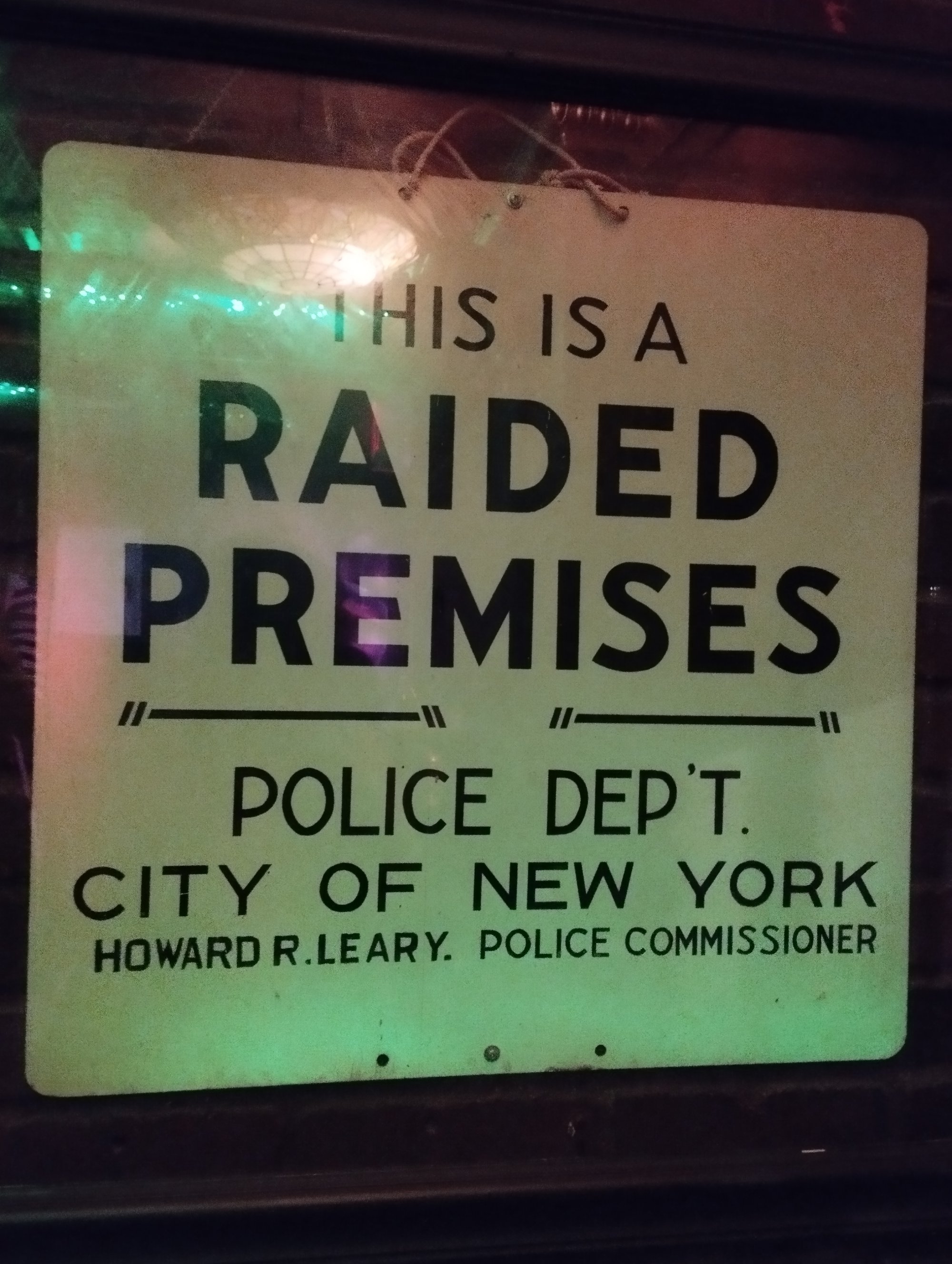
The Stonewall Inn Uprising
open · USJust after 1 a.m. on June 28, 1969, officers from the New York City Police Department's Public Morals Section pushed through the doors of the Stonewall Inn at 53-57 Christopher Street in Greenwich Village. To the police, it was routine — a raid on a gay bar, a procedure they had run dozens of times across the city. To the people inside, it was one indignity too many.
The Stonewall Inn was a modest establishment — no running water behind the bar, a jukebox, a small dance floor — operated by the Genovese crime family since 1967. The venue had only been a gay bar since 1966, converted from a restaurant and boarding house. For many of its patrons — young people rejected by their families, transgender individuals with few alternatives — it was one of the only places in the city where they could exist without the immediate threat of arrest or violence.
Under the laws of the era, their presence was itself the offense. The American Psychiatric Association classified homosexuality as a mental disorder until 1973. Gay bars routinely lost their liquor licenses. Police used entrapment to arrest men simply for being there. Anyone wearing fewer than three pieces of gender-appropriate clothing could be taken in. Arrest records appeared in newspapers, destroying careers and families. The Mattachine Society, founded in 1950, and the Daughters of Bilitis, established in 1955, had advocated carefully and quietly for years — assimilationist strategies that drew minimal public attention. In 1965, activists had picketed the White House. The legal landscape had barely shifted.
The standard procedure for a bar raid was compliance and dispersal. On June 28, 1969, that did not happen.
As officers began loading arrested individuals into police vehicles on Christopher Street, a crowd gathered outside. A young woman — described by witnesses as a transgender individual or butch lesbian — was being roughly handled as she was guided toward a patrol car. She called out to the gathering crowd, demanding to know why no one was acting. The crowd began throwing coins, then bottles, then bricks. The officers, caught off guard by the intensity of the response, retreated back into the bar for their own safety.
Confrontations continued for approximately six days. On Saturday night the crowd swelled to over 2,000 people. Protesters marched through Greenwich Village, chanting and clashing with police in running confrontations that extended into the early morning hours. Mimeographed flyers circulated announcing a "Gay Power" demonstration. The protests spread beyond Christopher Street as word moved through New York's gay community.
Initial media coverage was often dismissive or sensationalized — focused on the theatrics of drag queens and fire extinguishers rather than the underlying pattern of systematic harassment that had produced them. But the images were unlike anything visible before: gay patrons fighting back against police in public, in plain view of the street.
The movement that emerged was different from what had come before. New organizations — the Gay Liberation Front, the Gay Activists Alliance — formed in the months that followed, built around visibility and direct action rather than quiet negotiation. In December 1969, Craig Rodwell, owner of the Oscar Wilde Bookshop, proposed marking the first anniversary of the Stonewall raid with a march. The proposal was taken up by the Eastern Regional Conference of Gay Liberation Organizations.
On June 28, 1970 — one year to the day — the first Christopher Street Liberation Day March drew an estimated 10,000 to 15,000 participants in New York City, with simultaneous demonstrations in Chicago and Los Angeles. That tradition spread worldwide over the following years. Gilbert Baker designed the rainbow flag in 1978 as its emblem.
Legal victories accumulated over the decades that followed. The Supreme Court's 2003 decision in Lawrence v. Texas struck down sodomy laws nationwide. The "Don't Ask, Don't Tell" policy was repealed in 2011. The 2015 ruling in Obergefell v. Hodges made same-sex marriage legal across the country.
None of that was visible on the morning of June 28, 1969, when a crowd on Christopher Street refused to comply. The Stonewall Inn had been raided before. The refusal was new.
1 claim
Not yet independently verified